
 English
 русский
 Español
 Indonesia
 Tiếng Việt
 Current Location:
-
Drum Handling Tools: Making Oil Drum Lifting, Moving and Positioning Easier | MKBK Hoist
-
Mobile Hydraulic Electric Crane with Automatic Telescopic Boom: Move, Lift and Position Heavy Loads with Less Effort
-
Manual Balanced Fork Crane 1–5 Ton: A Practical Lifting Solution for Tight Spaces
-
Mixed Loading Material Handling Equipment in One 40HQ Container: A Smarter Way to Reduce Shipping Costs

Online consulting
If you have any questions, please contact our online customer service staff immediately
Hydraulic Lifting Platforms: One Solution Is Never Enough
 Click:605
  Time:2026-08-20 16:23:05
When people talk about a hydraulic lifting platform, they often picture a simple scissor lift moving up and down.
But once you start looking at real working conditions, things become much more interesting.
A warehouse may need a compact DC scissor lift. A construction contractor may need a self-propelled hydraulic aerial work platform. A maintenance company may prefer a towable model that can be moved between different job sites. In another application, an aluminum alloy lifting platform may be the better choice because low weight and easy transportation matter more than maximum capacity.
This is why there is no single “best” hydraulic lifting platform.
The right machine depends on the working height, load, working environment, mobility requirements, available power supply and the way the equipment will actually be used.
At MKBK Hoist, we manufacture different types of hydraulic lifting platforms in volume and also develop customized solutions according to customer requirements.
Here is how our engineers look at the different options.
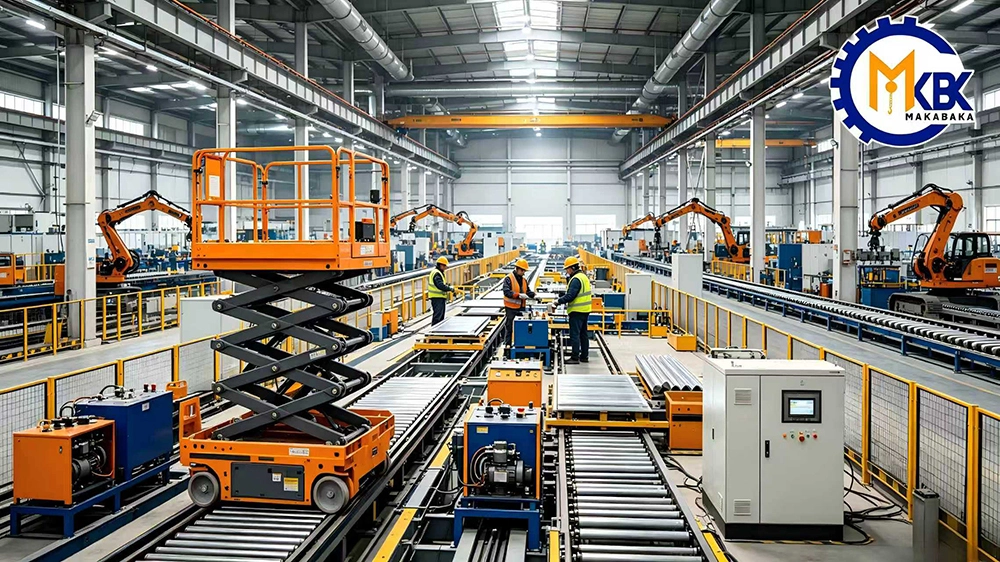
What Is a Hydraulic Lifting Platform?
A hydraulic lifting platform uses hydraulic power to raise and lower a platform or working deck.
In a typical hydraulic system, the motor drives a hydraulic pump. The pump generates hydraulic pressure, and hydraulic oil is directed into a cylinder. The cylinder then produces the force needed to move the lifting mechanism.
For a scissor-type platform, the hydraulic cylinder works together with crossed steel arms. As the arms extend, the platform rises vertically.
It sounds simple.
But the engineering behind a reliable lifting platform is not simply “put a hydraulic cylinder underneath a platform.”
The structure, cylinder position, hydraulic system, wheel arrangement, center of gravity, platform dimensions, control system and safety devices all need to work together.
For this reason, our engineers normally start with the customer's actual working condition instead of recommending a model only from a product catalog.
Why Are There So Many Types of Hydraulic Lifting Platforms?
A lifting platform used inside a warehouse has completely different requirements from one used on a construction site.
Indoor equipment may need:
Compact dimensions
Low noise
Battery power
Small turning radius
Easy transportation
Zero or low emissions
Outdoor construction equipment may instead require:
Higher working height
Better mobility
Stronger chassis
Larger wheels
Greater ground clearance
Self-propelled driving
Some customers do not need to drive the machine at all. They simply need to tow it to the working location.
Others need a lightweight platform that two people can move easily.
That is exactly why MKBK Hoist offers several configurations instead of trying to force every customer into the same machine.
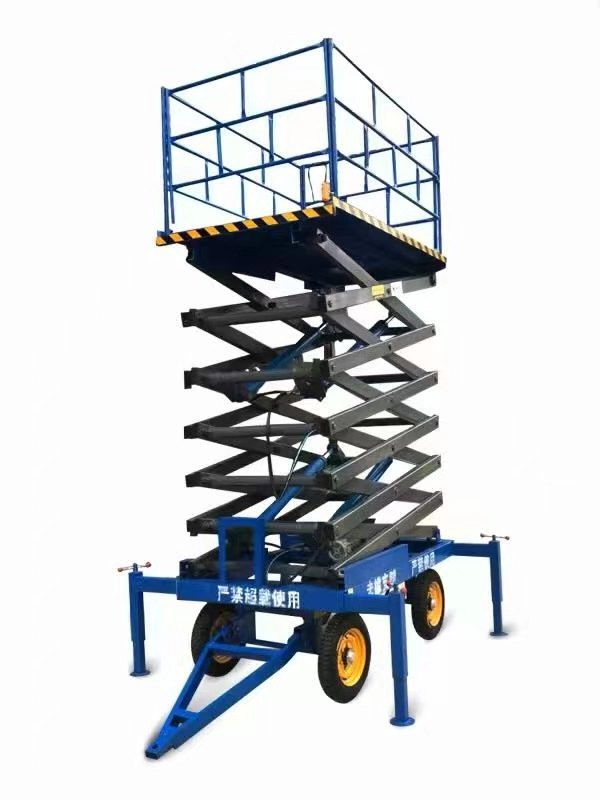
1. Blue Scissor hydraulic lifting platform
A Blue Scissor hydraulic lifting platform is designed for customers who need mobility but do not necessarily need a self-propelled machine.
The platform can be transported by a suitable vehicle and positioned at different working locations.
This makes it particularly useful for:
· Building maintenance
· Outdoor installation
· Electrical work
· Advertising board installation
· Construction projects
· Facility maintenance
· Rental businesses
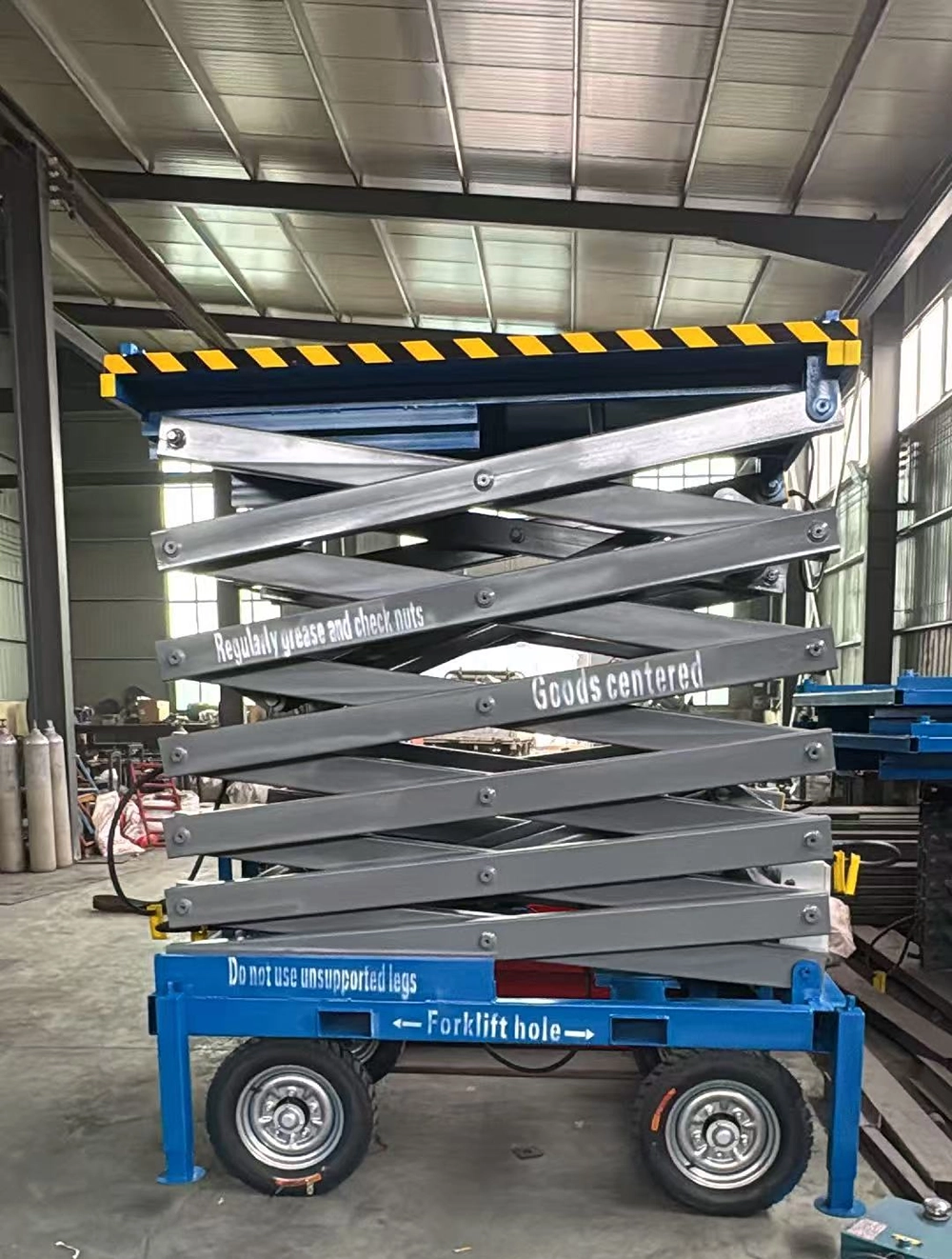
From an engineering point of view, the important issue is not simply the maximum lifting height.
Our engineers also pay attention to the chassis, towing structure, stabilizers, wheel configuration and overall stability.
For example, if a customer tells us, “I need a 10-meter lifting platform,” that information alone is not enough to select the machine.
We also need to know:
Where will it work?
How often will it be moved?
What is the required platform capacity?
Will it be used indoors or outdoors?
What type of vehicle will tow it?
What is the local power supply?
These questions can change the recommended configuration completely.
2. Self-Propelled Hydraulic Lifting Platform
When the machine needs to move frequently around a working site, a self-propelled hydraulic lifting platform can save a considerable amount of time.
Instead of lowering the platform, disconnecting transportation equipment and moving the machine manually, the operator can drive the machine directly to another working position.
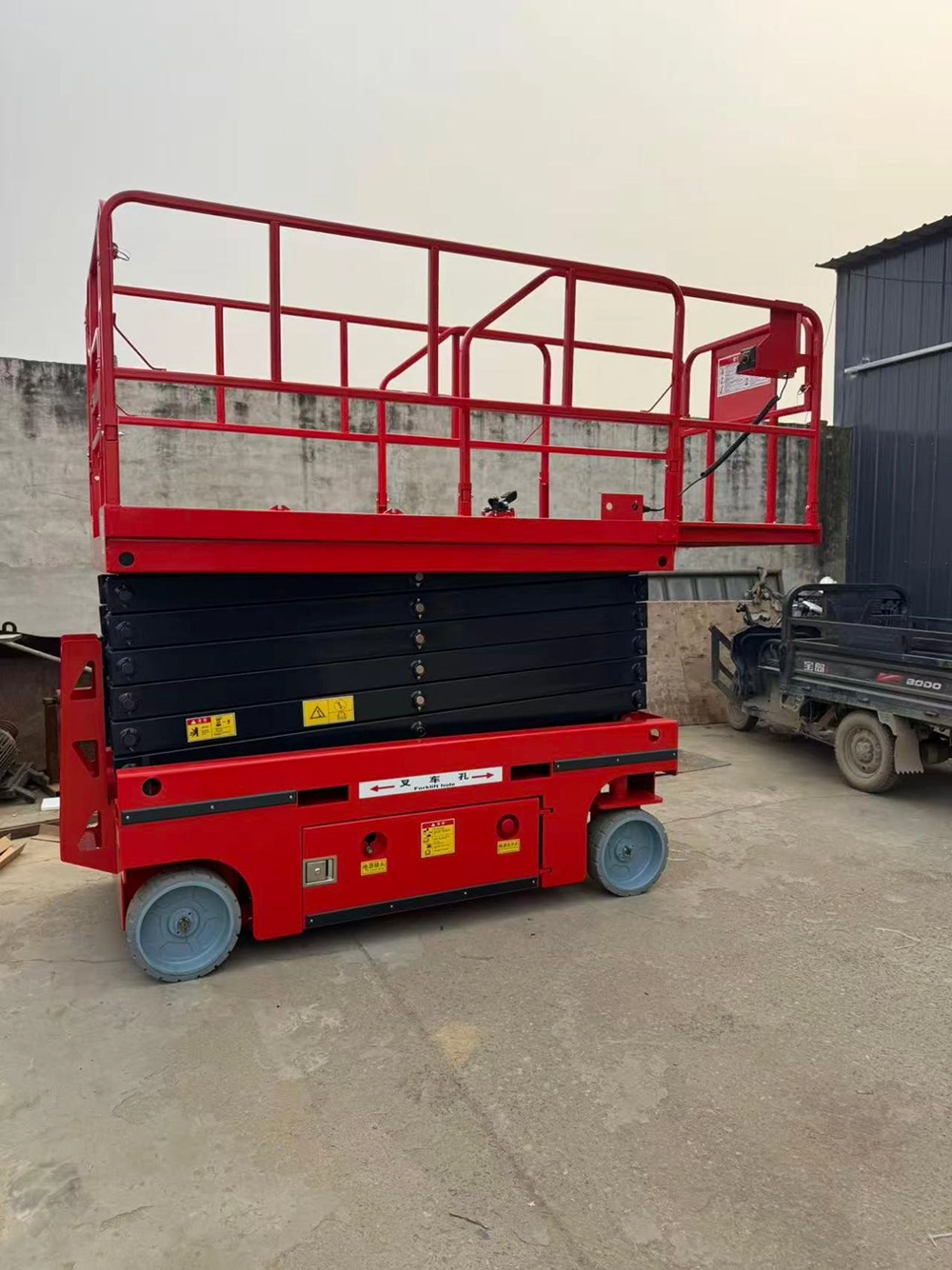
This type is commonly considered for:
· Construction sites
· Factory maintenance
· Warehouse operations
· Building installation
· Equipment maintenance
· Large indoor facilities
The biggest advantage is productivity.
Imagine a maintenance team working across a large factory. If the machine has to be repositioned manually every few meters, a surprising amount of working time can disappear.
With a self-propelled platform, driving and lifting functions are integrated into the machine.
However, self-propelled does not automatically mean “better.”
If the machine will stay in one position most of the time, paying extra for mobility may not make economic sense.
This is one of the reasons our engineers always recommend selecting the machine according to the application rather than simply choosing the model with more functions.
3. Aluminum Alloy Lifting Platform
Sometimes the biggest problem is not lifting capacity.
It is weight.
For maintenance companies, installation teams and applications where equipment must be transported frequently, an aluminum alloy lifting platform can offer a practical solution.
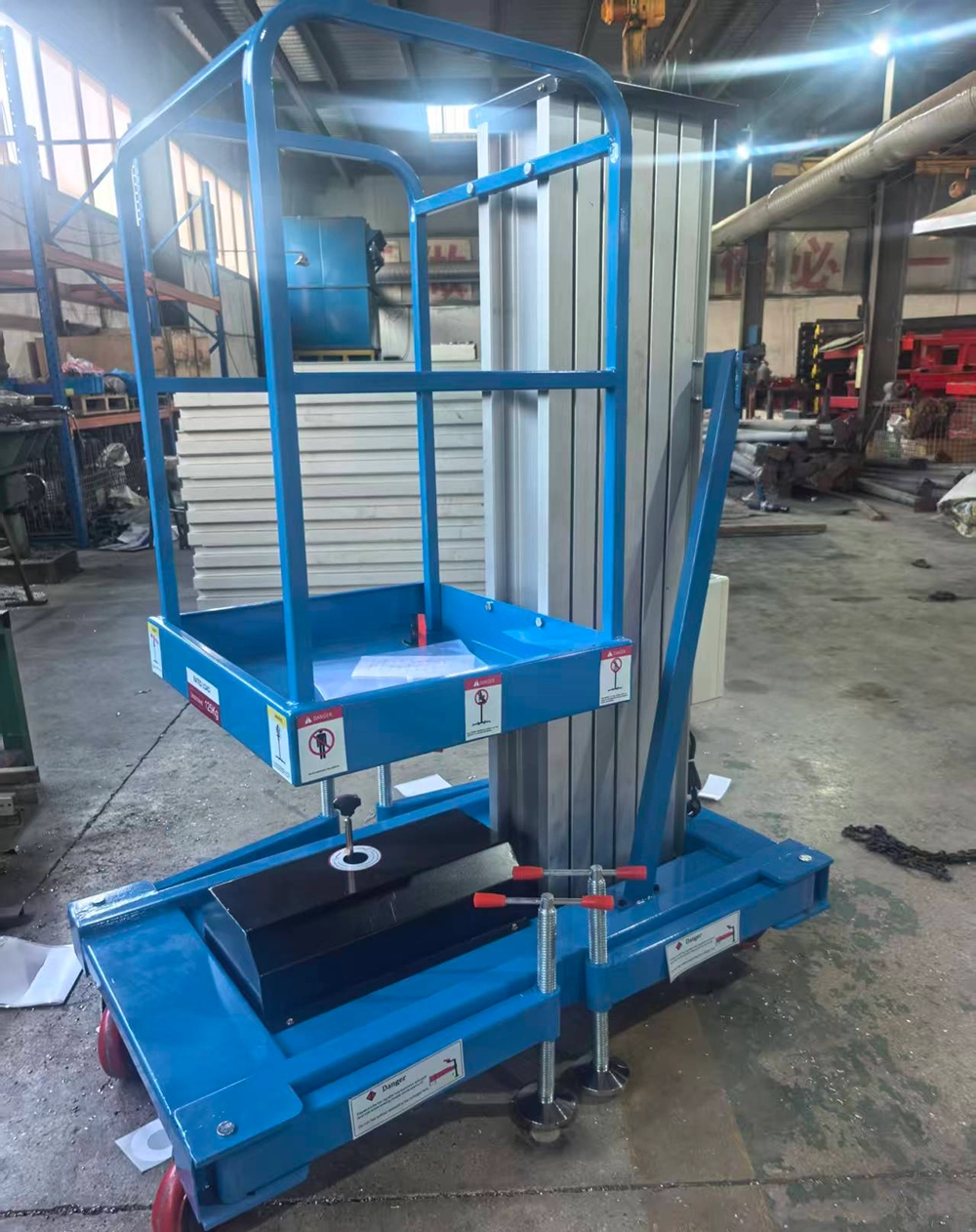
Compared with conventional steel structures, aluminum alloy construction can significantly reduce the equipment's overall weight while maintaining the required structural performance when properly designed.
Typical applications include:
· Indoor maintenance
· Electrical installation
· Lighting maintenance
· Shopping malls
· Airports
· Exhibition halls
· Building decoration
· Facility inspection
The lightweight design makes transportation easier.
And when the machine needs to be moved through narrow areas or loaded into a vehicle regularly, every kilogram matters.
But lightweight equipment should never mean “lightly engineered.”
Our engineers still need to consider platform dimensions, working height, rated load, stability and operating environment before determining the structure.
4. DC Scissor Lift Platform
For customers working indoors or in locations without convenient three-phase power, a DC scissor lift platform is often a practical option.
The machine uses battery power to operate the lifting and driving system, depending on the configuration.
The advantages are straightforward:
Quiet operation.
No direct exhaust emissions during operation.
Easy movement.
Convenient indoor use.
Compact configuration.
That makes DC scissor lifts particularly attractive for warehouses, factories, commercial buildings and maintenance work.
However, battery-powered equipment also requires proper consideration of battery capacity, charging time, duty cycle and working frequency.
A customer who operates the machine for one hour a day has very different requirements from a customer who expects continuous operation throughout a full shift.
This is another example of why “same lifting height” does not mean “same machine.”
5. Electric Three-Wheel Scissor Lift Platform
This is one of the more interesting configurations in the hydraulic lifting platform family.
A three-wheel electric scissor lift platform focuses on compact movement and maneuverability.
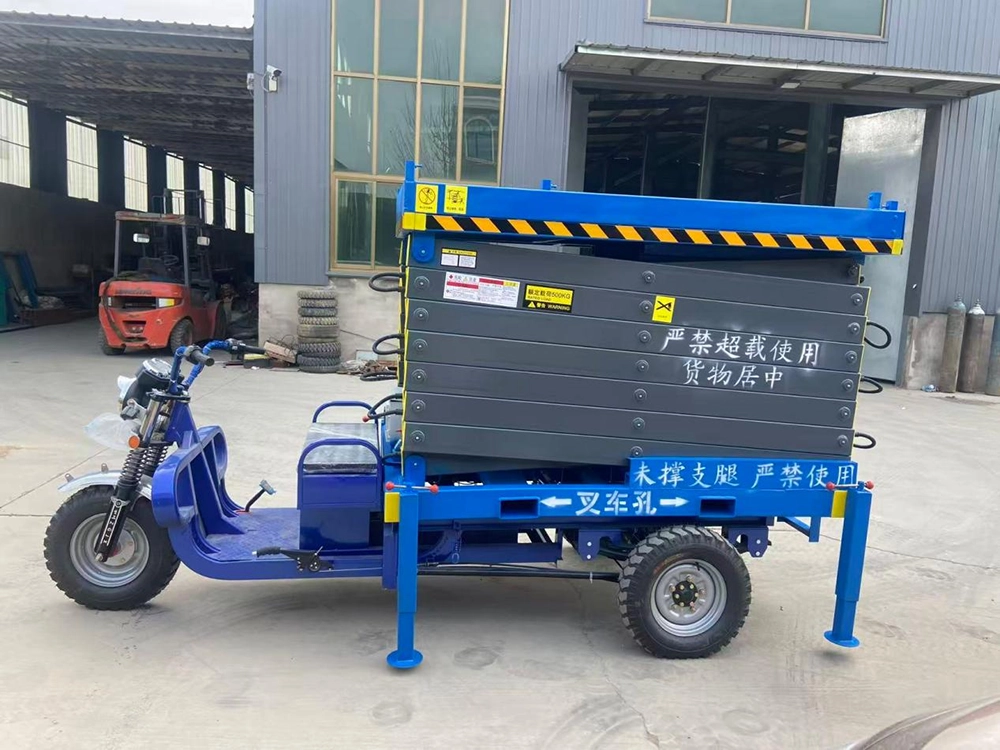
In applications where floor space is limited, turning radius can become more important than maximum speed.
For example, a machine may need to move between production equipment, warehouse aisles or indoor maintenance areas.
A compact three-wheel configuration can make positioning easier in these environments.
From the engineering side, however, a smaller footprint also means that stability needs careful consideration.
The design cannot simply become smaller and smaller.
Engineers need to balance:
· Platform height
· Rated capacity
· Wheelbase
· Center of gravity
· Platform dimensions
· Turning radius
· Ground conditions
A good compact machine is not simply a small machine.
It is a machine where every dimension has a reason.
How Do Engineers Choose the Right Hydraulic Lifting Platform?
This is probably the most important question.
At MKBK Hoist, our engineers normally look at several basic parameters before recommending a configuration.
1. Working Height
First, determine the required working height.
But be careful with terminology.
“Platform height” and “working height” are not always the same thing.
A customer should tell us the actual height required for the operation, not simply say “I need a 10-meter lift.”
This allows the engineering team to select the appropriate lifting height and platform configuration.
2. Rated Load
Next comes the load.
Do not calculate only the worker's weight.
Tools, spare parts, materials and equipment carried onto the platform should also be considered.
For example, a technician may weigh 80 kg, but if he is carrying tools, cables and installation materials, the actual working load will obviously be higher.
The rated capacity should therefore be selected according to the complete working situation.
3. Indoor or Outdoor?
This question can completely change the machine recommendation.
Indoor applications usually put more emphasis on:
· Compact size
· Low noise
· Battery operation
· Turning radius
· Floor protection
Outdoor applications may require more attention to:
· Ground conditions
· Stability
· Wheel configuration
· Wind exposure
· Mobility
· Environmental conditions
A platform that performs perfectly on a smooth factory floor should not automatically be considered suitable for every outdoor site.
4. How Often Will the Machine Move?
This is another question customers sometimes overlook.
If the machine moves once a week, a towable model may be sufficient.
If it moves between work locations dozens of times every day, self-propelled operation can make much more sense.
In other words:
Mobility should be designed around the working rhythm.
Not around the product brochure.
5. What Power Supply Is Available?
Power requirements also matter.
Depending on the model and configuration, customers may require battery/DC power or an external electrical supply.
Before production, our engineering team confirms the customer's voltage, frequency and operating environment to avoid unnecessary changes later.
For international projects, this is especially important because electrical specifications can vary between markets.
Customization: Because Real Projects Are Rarely “Standard”
One thing we have learned from manufacturing lifting equipment is that customers rarely have exactly the same requirements.
One customer may need a larger platform.
Another may need a special platform dimension.
Another may require a different control arrangement.
Someone else may need a particular working height, wheel configuration, power supply or color.
That is why MKBK Hoist supports customized hydraulic lifting platforms.
Customization can involve:
· Platform dimensions
· Lifting height
· Rated capacity
· Power supply
· Control system
· Wheel configuration
· Stabilizer design
· Platform extension
· Safety configuration
· Surface treatment
· Customer color and branding
The key point is that customization should start with the application.
A good customized machine is not simply a standard machine with a few parts changed.
The structure and hydraulic system need to be checked again to make sure the final configuration works as a complete system.
From Engineering Drawing to Mass Production
For MKBK Hoist, manufacturing capability is an important part of our lifting platform business.
We produce lifting platforms in batches, which means we can support both regular orders and customized projects.
The general process includes:
1. Confirming application requirements
2. Selecting the lifting configuration
3. Checking load and working height
4. Designing the structure
5. Confirming hydraulic components
6. Manufacturing and welding
7. Surface treatment
8. Assembly
9. Testing
10. Final inspection
11. Packing and shipment
Testing is particularly important.
A lifting platform is not a product where “it looks good” is enough.
The platform needs to operate smoothly, and the hydraulic system, controls, structural components and safety functions need to work together as designed.
Our production team therefore checks the machine before shipment so customers can receive equipment that is ready for its intended application.
What Makes a Good Hydraulic Lifting Platform?
If you are comparing different suppliers, don't look only at the price.
Ask a few more questions.
What is the actual rated capacity?
What is the platform height?
What is the working height?
What power supply does it require?
What is the machine's overall dimension?
How does it move?
What safety functions are included?
Can the manufacturer customize the machine?
And perhaps the most important question:
Does the manufacturer understand your application?
A cheap machine that does not match the working environment is not cheap.
It becomes an expensive problem.
Why Work With MKBK Hoist?
MKBK Hoist is focused on manufacturing lifting and material-handling equipment for industrial customers and distributors.
Our product range covers different hydraulic lifting platform configurations, including towable hydraulic lifting platforms, self-propelled lifting platforms, aluminum alloy lifting platforms, DC scissor lifts and electric three-wheel scissor lift platforms.
We support both standard production and customized orders.
For distributors, contractors, rental companies and industrial users, this means you do not have to start with a machine and then try to make your application fit it.
Tell us what you actually need.
Working height.
Load capacity.
Platform size.
Indoor or outdoor use.
Power supply.
Mobility requirements.
Quantity.
We can then work backward from the application and recommend the appropriate configuration.
That is how engineering should work.
Not “Here is our catalog. Pick one.”
Final Thoughts
Hydraulic lifting platforms may look similar from a distance, but their engineering requirements can be completely different.
A towable platform is designed around transportation.
A self-propelled platform is designed around mobility.
An aluminum alloy platform is designed around lightweight handling.
A DC scissor lift is designed around efficient electric operation.
A three-wheel scissor lift focuses on compact movement and maneuverability.
And a customized platform is designed around one customer's actual working conditions.
There is no universal winner.
There is only the right machine for the right job.
If you are planning to purchase hydraulic lifting platforms, build a new product line or source equipment for your local market, MKBK Hoist can support you from specification confirmation to mass production.
Send us your required lifting height, capacity, platform size and application.
Our engineers will help you work out the practical solution.
Need a lifting platform that fits your job instead of forcing your job to fit the machine?
Contact MKBK Hoist.
We manufacture. We customize. We deliver.
 Factory Address: Dongl ü industrial Area,Qingyuan District, Baoding City, Hebei Province, China
 Contact number:
 Emall:
  Website:





 Home
Home Whatsapp
 Email
Email