
 English
 русский
 Español
 Indonesia
 Tiếng Việt

 Current Location:
-
Semi-Electric Stacker with Paper Roll Clamp: Customized Handling Solutions | MKBK Hoist
-
Drum Handling Tools: Making Oil Drum Lifting, Moving and Positioning Easier | MKBK Hoist
-
Mobile Hydraulic Electric Crane with Automatic Telescopic Boom: Move, Lift and Position Heavy Loads with Less Effort
-
Manual Balanced Fork Crane 1–5 Ton: A Practical Lifting Solution for Tight Spaces
Online consulting
If you have any questions, please contact our online customer service staff immediately
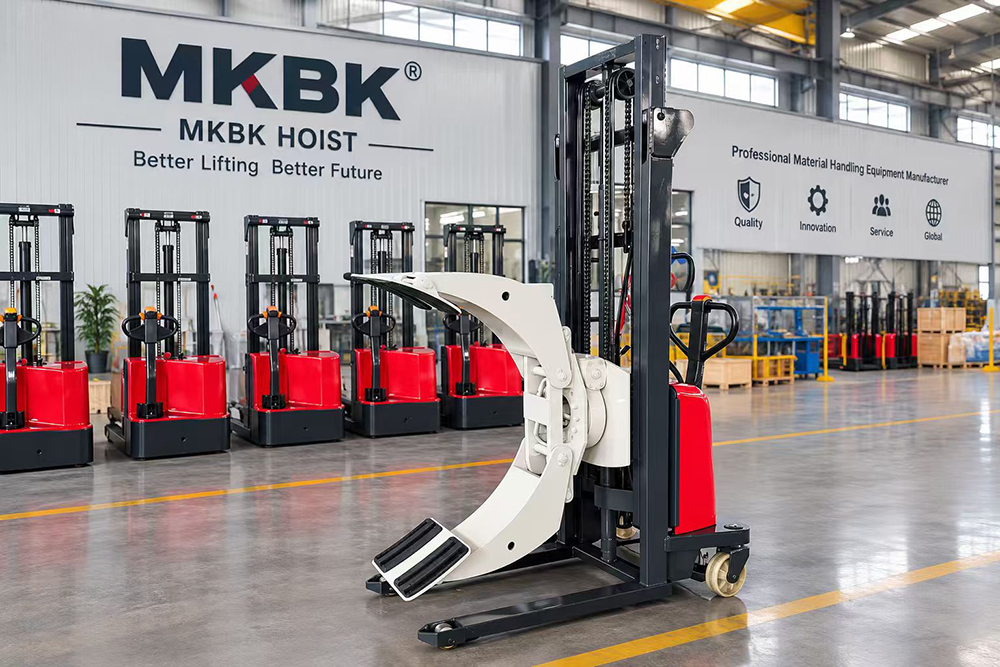
Semi-Electric Stacker with Paper Roll Clamp: Customized Handling Solutions | MKBK Hoist
 Click:4
 Time:2026-10-22 17:10:53
A paper roll is not just another load. Handle it the wrong way, and a small mistake can damage an entire roll.
For paper mills, printing companies, packaging manufacturers, and paper distributors, moving paper rolls safely is a daily challenge. The rolls can be heavy, difficult to grip, and surprisingly easy to damage if the handling method is unsuitable. Ordinary forks may support a pallet, but they are not always the right solution for handling individual paper rolls.
That is why a semi-electric stacker with a paper roll clamp can be a practical choice.
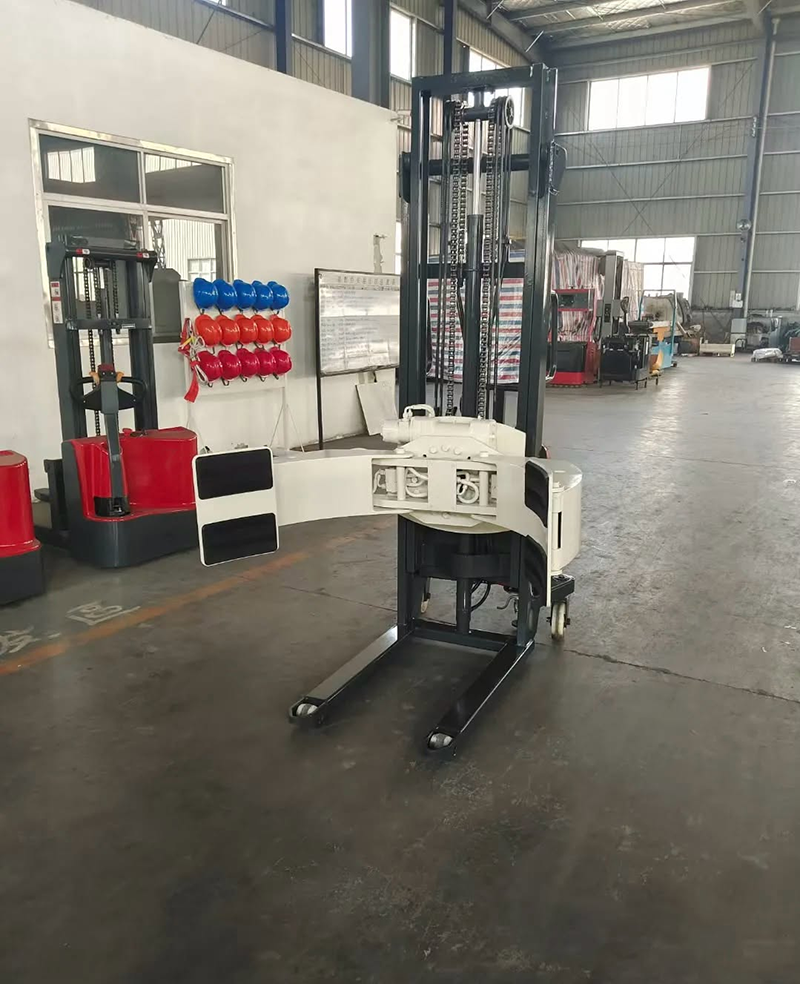
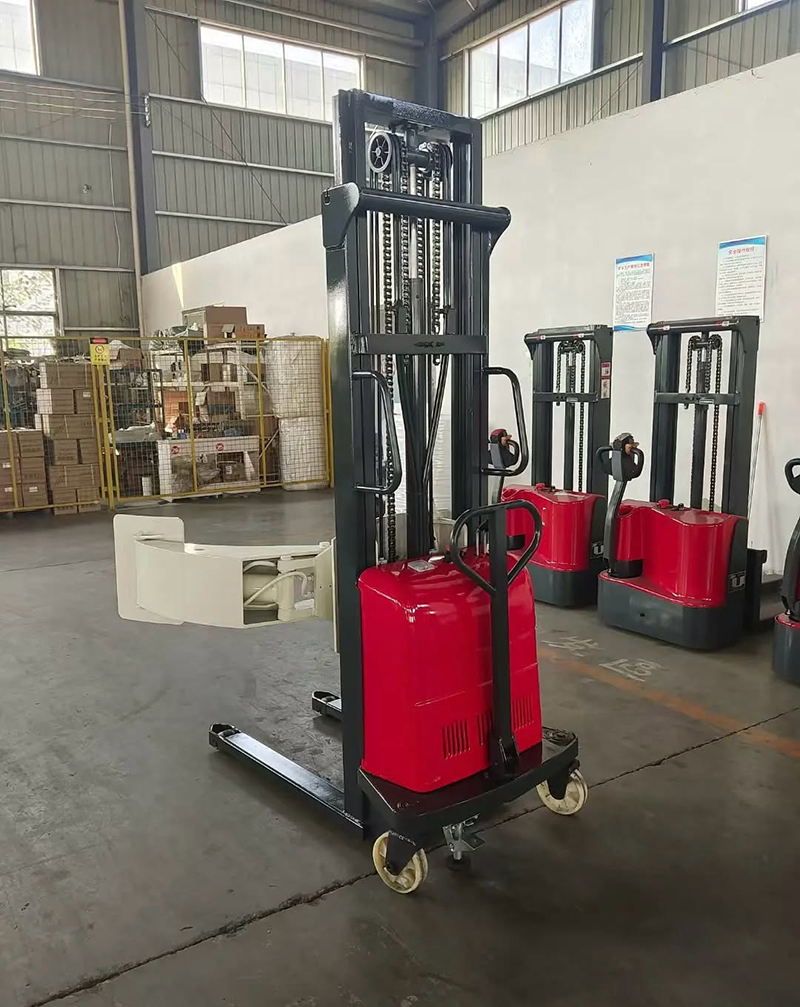
At MKBK Hoist, we provide customized material handling equipment designed around the customer's actual application. This semi-electric stacker was developed to meet specific paper roll handling requirements, with a dedicated clamping attachment rather than a standard fork arrangement. Supplied directly from the factory and commissioned before shipment, the equipment is prepared according to the confirmed configuration before dispatch.
What Is a Semi-Electric Stacker with a Paper Roll Clamp?
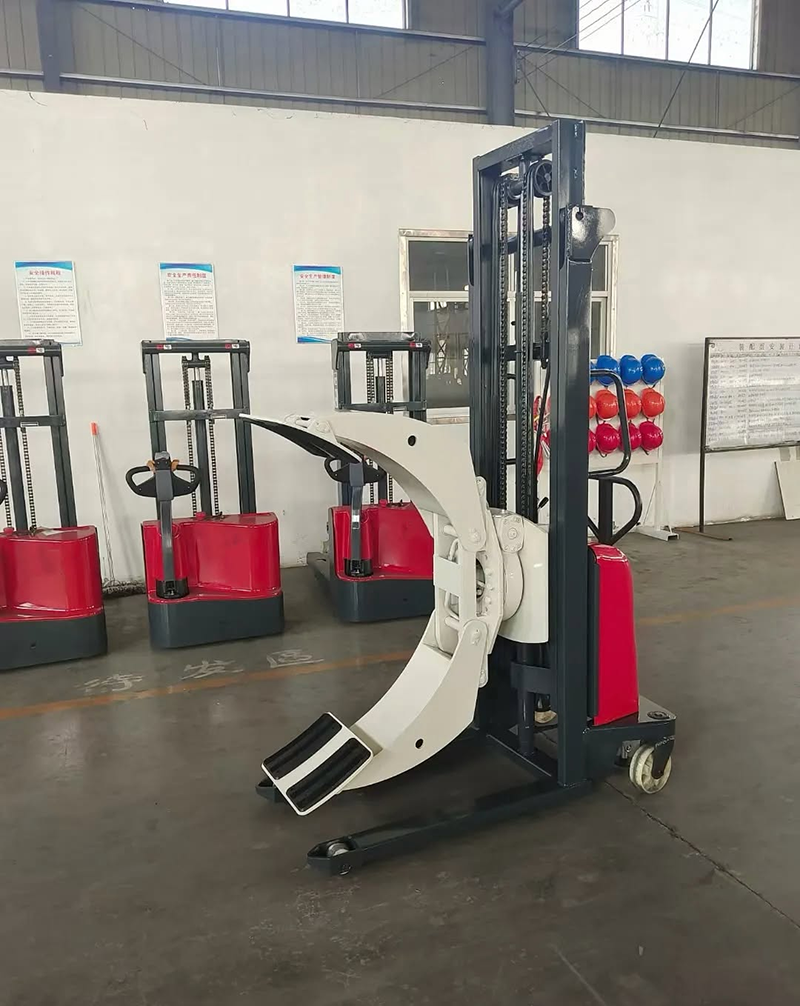
A semi-electric stacker combines powered lifting with manual travel. Depending on the design, the operator moves the machine manually while an electric system raises and lowers the load. A paper roll clamp is a specialized attachment designed to grip a roll so it can be lifted and repositioned without relying solely on pallet support.
This combination can be useful in facilities where paper rolls need to be moved between storage areas, production lines, workstations, or packaging processes, but a larger forklift may not be the most practical option.
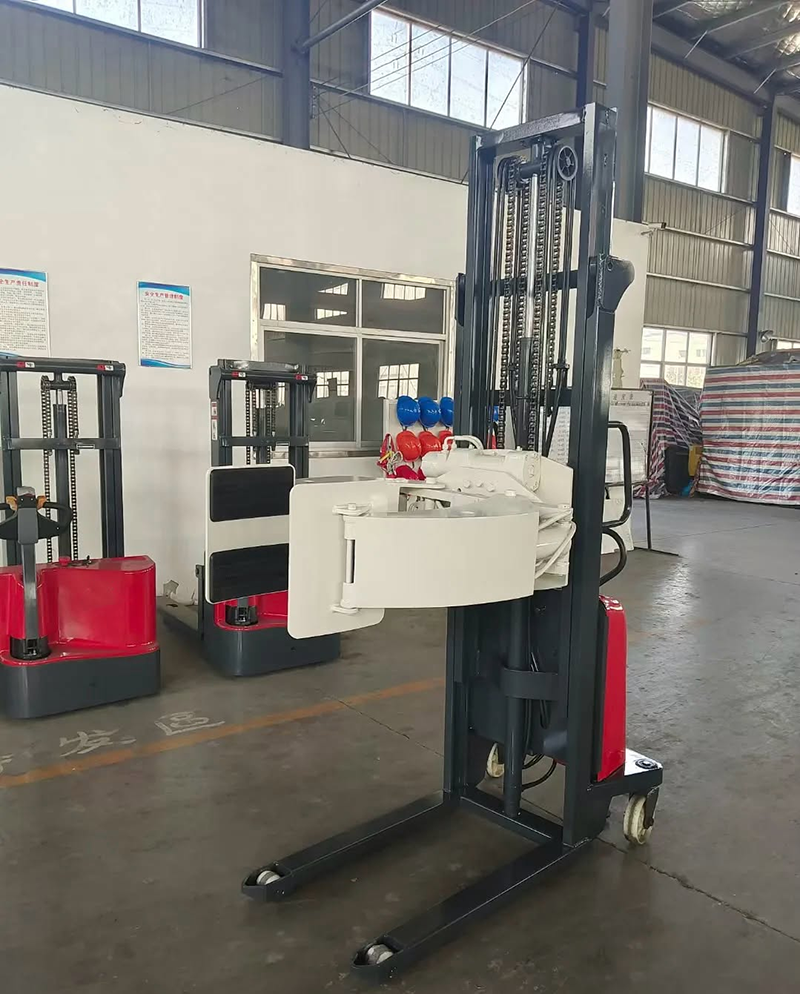
The key difference is the attachment. A conventional stacker is generally designed to handle palletized goods using forks. A paper roll clamp must hold the cylindrical load securely while taking care not to crush, deform, or mark the paper.
That makes this equipment more than a standard stacker with an extra component. The lifting system, clamp structure, load position, and machine stability must all work together.
Why Choose a Customized Paper Roll Handling Solution?
Paper rolls come in different diameters, widths, weights, and surface conditions. A machine suitable for one production line may not be suitable for another.
For example, a packaging factory may handle relatively narrow rolls, while a paper processing plant may need to move larger rolls with a different center of gravity. Some customers work in confined spaces where maneuverability matters most. Others need to position rolls accurately near production equipment.
A customized stacker allows these differences to be considered before the machine is built.
At MKBK Hoist, the configuration can be discussed according to the customer's paper roll dimensions, required lifting height, rated load, working space, and handling procedure. The purpose is not to add unnecessary features. It is to make sure the equipment matches the real job.
Customization should begin with a clear understanding of the load and the working environment, not simply with a request for a particular machine name.
An Engineer's Perspective: Three Things That Matter Most
1. Clamp Force Must Match the Paper Roll
One of the most important engineering considerations is the relationship between clamping force and paper roll protection.
If the clamping force is too low, the roll may slip during lifting or movement. If it is too high, the clamp may compress the roll and damage its edges or surface. The correct setting depends on factors such as roll weight, diameter, paper type, surface friction, and the design of the contact pads.
This is why clamp force should not be selected by guesswork. The attachment needs to provide sufficient holding force while remaining appropriate for the material being handled.
For customers, it is useful to provide the factory with representative roll specifications and explain whether the paper surface is particularly sensitive to pressure or marking.
2. Load Capacity Is More Than a Number on a Nameplate
A stacker's rated capacity must be assessed together with the clamp attachment and the load's position.
Adding an attachment can change the distance between the load center and the lifting structure. It may also add weight to the front of the machine. Both factors can affect the remaining usable capacity and overall stability.
For this reason, the capacity of a standard stacker should never automatically be treated as the capacity of the same machine fitted with a paper roll clamp.
The final rated capacity must be confirmed for the complete configuration, including the attachment, lifting height, and applicable operating conditions. Operators should follow the machine's rated limits and never assume that the equipment can lift the same weight at every height.
This detail is especially important when customers are comparing quotations from different suppliers. Two machines may look similar, but their approved capacities with the actual attachment can be different.
3. Stability and Roll Position Need to Be Considered Together
Paper rolls are cylindrical, and their center of gravity must be considered during handling. If the roll is not positioned correctly, or if it shifts while being raised, the load can become unstable.
The engineer therefore needs to review how the roll is picked up, how it is held, and where it must be placed. The clamp geometry, attachment dimensions, lifting mast, and stacker structure should be suitable for the intended application.
The floor condition and available working space also matter. A manual-travel stacker is most appropriate when the route, surface, turning space, and load-handling requirements suit its design. It should not be treated as a substitute for a powered industrial truck in every operating environment.
Good equipment design starts by considering the complete movement, from collecting the roll to placing it safely at the destination.
Where Can This Equipment Be Used?
A semi-electric stacker with a paper roll clamp may be suitable for paper mills, printing plants, packaging factories, paper converting workshops, and paper product warehouses, provided the model is correctly specified for the application.
In a printing facility, it can help move rolls between storage and production areas. In packaging operations, it may support the handling of paper used for cartons, wrapping, or other converted products. In warehouses, it can help reposition suitable rolls without requiring every movement to be handled by a larger forklift.
The actual benefits depend on the load dimensions, required lifting height, travel distance, floor conditions, and frequency of operation.
For smaller or medium-sized facilities, a semi-electric design may offer a useful balance between powered lifting and straightforward manual movement. However, customers should assess the handling frequency and operator workload before choosing between semi-electric and fully electric equipment.
The best solution is the one that fits the work, rather than the one with the most complicated specification.
Customer Customization, Brought to Life
A successful customized machine should solve a specific problem. It should not force the customer to change an established workflow simply to accommodate standard equipment.
For this paper roll clamp stacker, the customization process begins with the customer's requirements. These may include roll diameter, roll width, maximum roll weight, lifting height, clamp opening range, contact-pad requirements, and the available operating space.
The engineering team can then review the required configuration and confirm which specifications are technically feasible. If a detail could affect capacity, stability, or roll protection, it should be addressed before production rather than discovered after delivery.
This approach helps align the equipment with the customer's handling process and reduces the risk of mismatched specifications.
For overseas buyers, clear communication at this stage is particularly valuable. Photos, drawings, roll measurements, and descriptions of the intended operation can help the factory understand the application more accurately.
A customized solution is not simply a machine made to look different. It is a machine configured around the load, the process, and the conditions in which it will work.
Factory-Direct Supply and Pre-Shipment Commissioning
When purchasing customized lifting equipment, buyers need more than a quotation. They need confidence that the machine being delivered corresponds to the configuration they approved.
MKBK Hoist supplies equipment directly from the factory, allowing customers to discuss technical requirements and customization details with the team responsible for the order.
Before production is finalized, the key specifications should be confirmed, including the stacker's rated capacity, lifting height, clamp dimensions, suitable paper roll range, and required power supply. This gives both sides a clear reference for the finished machine.
Before shipment, the equipment is commissioned and checked according to the confirmed model and applicable inspection procedures. Relevant functions, such as lifting and lowering, control operation, and clamp operation where fitted, can be checked against the equipment configuration.
Pre-shipment commissioning helps identify potential issues before dispatch and gives customers greater confidence when preparing for delivery. It does not replace safe installation, operator training, or inspections required at the destination, but it is an important step in preparing customized equipment for use.
For distributors and end users alike, this combination of factory-direct supply, specification confirmation, and pre-shipment checking can make the purchasing process clearer and more manageable.
What Information Do We Need to Recommend the Right Model?
To help MKBK Hoist evaluate a suitable semi-electric stacker with a paper roll clamp, customers should provide the maximum paper roll weight, minimum and maximum roll diameters, roll width, required lifting height, and the height at which the roll needs to be placed.
It is also helpful to know whether the roll is handled horizontally or vertically, how frequently it is moved, the width of the working aisle, and whether the floor is smooth and level.
If you already have a standard stacker model in mind, please share its specifications. If you are replacing an existing handling method, photos or a short video of the current process can help clarify the problem the new equipment needs to solve.
With these details, the factory can review the requirements and discuss an appropriate configuration before a final quotation is prepared.
A Better Way to Handle Paper Rolls
Paper roll handling requires a different approach from ordinary pallet handling. The equipment must support the load, grip it appropriately, protect the paper, and remain stable throughout the lifting process.
A customized semi-electric stacker with a paper roll clamp can be a practical solution for suitable applications, particularly where powered lifting is needed but manual travel remains appropriate.
MKBK Hoist focuses on matching the equipment to the customer's actual requirements, with factory-direct supply, customization discussions, and pre-shipment commissioning.
Have a paper roll handling challenge? Send us your roll dimensions, maximum weight, and required lifting height. We will review the application with you and discuss a suitable configuration for your operation.
- Previous Article:
- Next Article: Drum Handling Tools: Making Oil Drum Lifting, Moving and Positioning Easier | MKBK Hoist

 Factory Address: Dongl ü industrial Area,Qingyuan District, Baoding City, Hebei Province, China
 Contact number:
 Emall:
 Website:





 Home
 Whatsapp
 Email