
 English
 русский
 Español
 Indonesia
 Tiếng Việt
 Current Location:
-
Semi-Electric Stacker with Paper Roll Clamp: Customized Handling Solutions | MKBK Hoist
-
Drum Handling Tools: Making Oil Drum Lifting, Moving and Positioning Easier | MKBK Hoist
-
Mobile Hydraulic Electric Crane with Automatic Telescopic Boom: Move, Lift and Position Heavy Loads with Less Effort
-
Manual Balanced Fork Crane 1–5 Ton: A Practical Lifting Solution for Tight Spaces
Online consulting
If you have any questions, please contact our online customer service staff immediately
Material Handling Equipment: How to Choose the Right Pallet Truck and Electric Stacker for Your Business
 Click:555
  Time:2026-09-07 14:07:50
The right material handling equipment doesn't just move goods — it makes the whole operation move better.
Walk into almost any warehouse or factory, and you will see materials moving constantly.
Pallets arrive at the unloading area.
Boxes move into storage.
Raw materials travel to production lines.
Finished products move toward packing and shipping.
It may look like simple transportation, but there is a lot happening behind every movement.
If workers are pushing heavy pallets manually, efficiency suffers. If the equipment is oversized for the application, the investment becomes unnecessary. If the stacker does not match the pallet size or lifting height, even a good machine can become difficult to use.
This is why choosing material handling equipment should start with the working condition, not the product name.
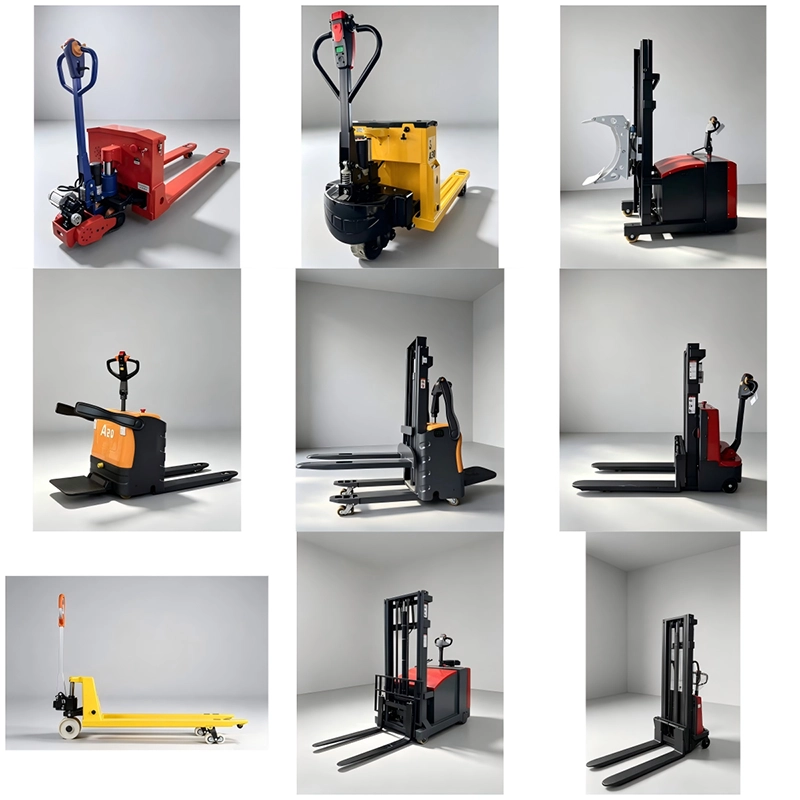
At MKBK, we manufacture a wide range of material handling equipment, including manual pallet trucks, electric pallet trucks, electric stackers and customized electric stackers.
We manufacture in volume and can also develop customized configurations according to customer requirements.
In this article, our engineering team explains how to choose the right equipment and what buyers should consider before placing an order.
What Is Material Handling Equipment?
Material handling equipment is used to move, lift, position, stack or transport materials within warehouses, factories, workshops, logistics centers and other working environments.
The equipment can be very simple.
For example, a manual pallet truck may use hydraulic power to lift a pallet just a few centimeters from the floor.
It can also be more advanced.
An electric stacker can lift pallets to a considerable height while using an electric drive system to reduce physical effort.
Between these two extremes is a large range of equipment designed for different applications.
The important point is:
There is no single material handling machine that is ideal for every job.
A warehouse with short-distance pallet movement has different requirements from a distribution center that needs frequent pallet stacking.
A small workshop has different requirements from a large logistics operation.
Good equipment selection is therefore about matching capacity, lifting height, mobility, dimensions and working frequency to the actual application.
Manual Pallet Truck: Simple, Practical and Hard to Replace
The manual pallet truck remains one of the most widely used pieces of material handling equipment.
Why?
Because it does one job very well:
Move pallets from A to B.
There is no complicated electrical system.
There is no battery charging.
There is no need for an operator to learn a complex control system.
The operator inserts the forks into the pallet, pumps the handle to raise the forks and then pushes or pulls the pallet to the destination.
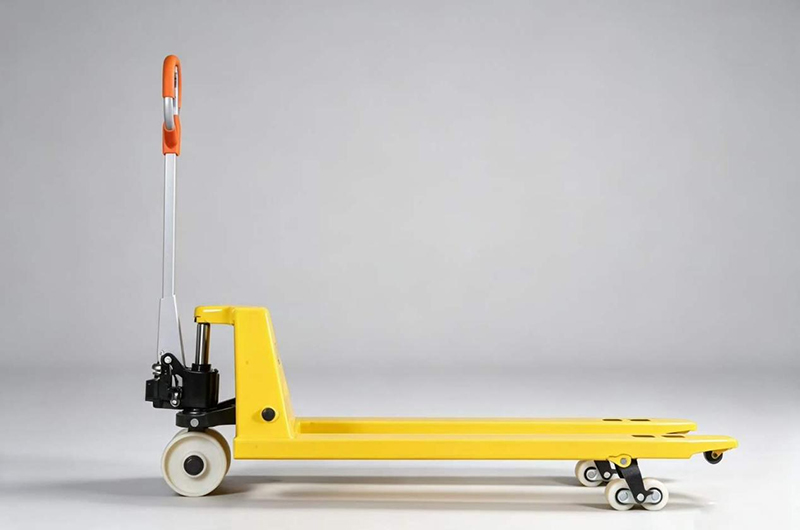
For warehouses, factories, workshops and loading areas where pallets only need to be moved short distances, this straightforward design can be extremely practical.
From an engineering perspective, several details matter.
Hydraulic Pump
The hydraulic pump is responsible for lifting the forks.
A good pump should provide stable lifting performance and controlled lowering.
Fork Structure
Fork length and width need to match the pallet.
If the forks are too short, pallet support may be insufficient.
If they are too long for the application, maneuverability can suffer.
Steering Handle
The handle is the operator's main connection with the machine.
Its structure, grip and steering response directly affect daily usability.
Wheels
Wheel material should match the floor and working environment.
Different applications may require different wheel configurations.
So although a manual pallet truck looks simple, there is quite a lot of engineering hidden inside it.
Electric Pallet Truck: When Manual Effort Becomes the Bottleneck
A manual pallet truck is excellent for many applications.
But what happens when the warehouse becomes larger?
Or when pallets become heavier?
Or when workers need to move pallets hundreds of meters every day?
This is where an electric pallet truck can make more sense.
An electric pallet truck uses a battery-powered drive system to move the pallet.
The operator controls the movement instead of manually pushing the entire load.
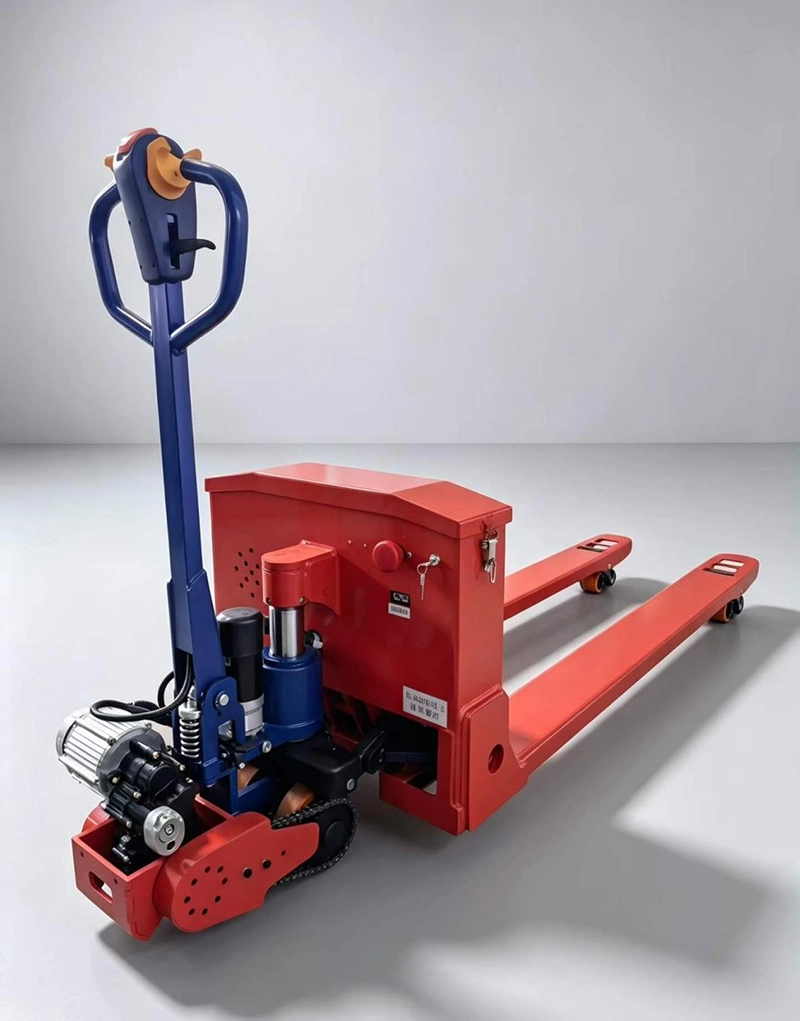
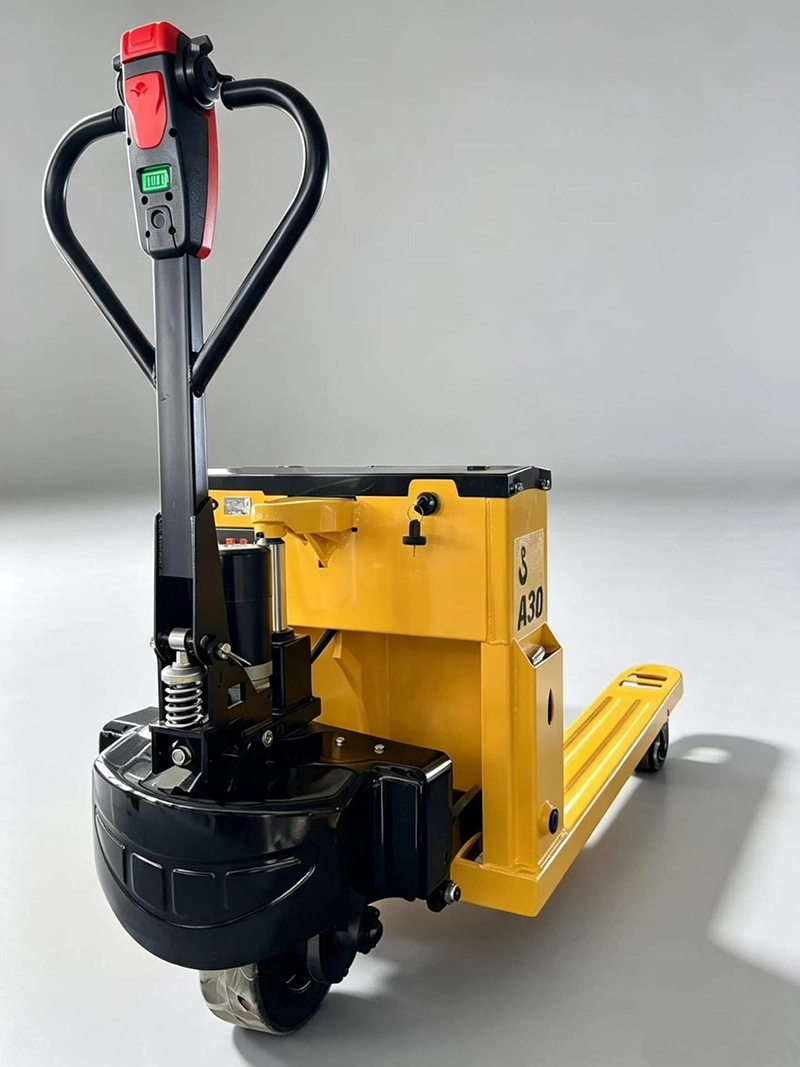
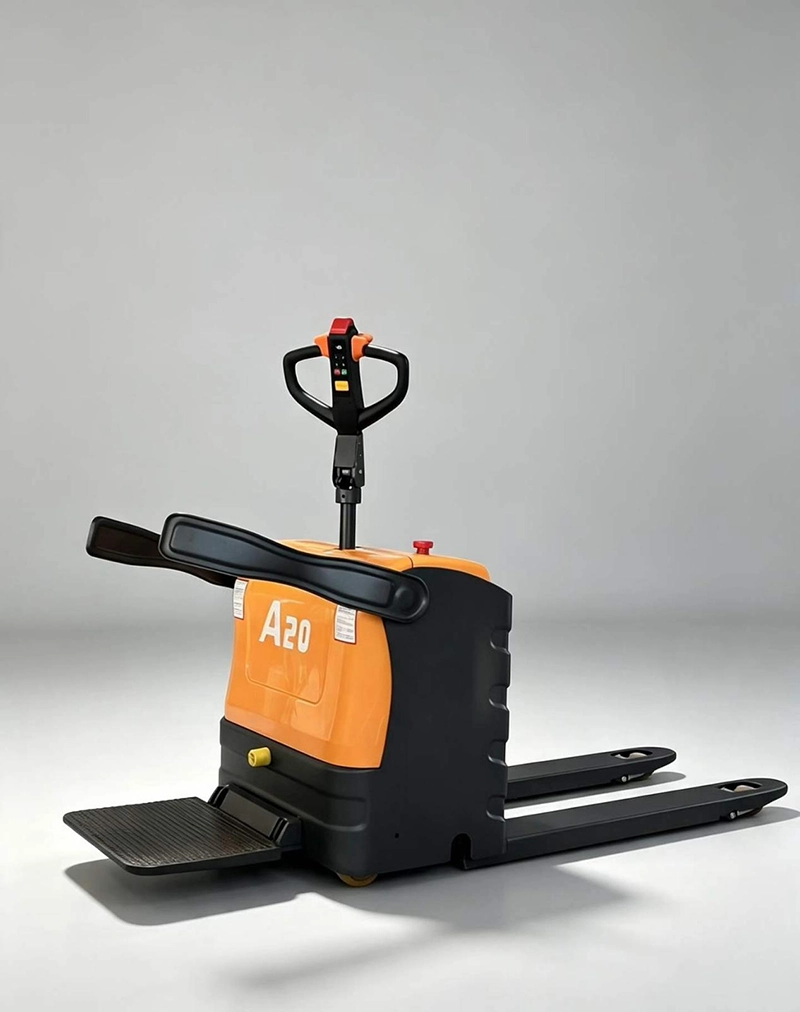
The biggest advantage is not simply speed.
It is reducing physical effort.
Imagine moving a 2,000 kg pallet across a warehouse.
The machine is carrying the load, but the operator still needs to control direction and speed.
With electric drive assistance, the physical demand on the operator can be significantly reduced.
This becomes particularly valuable when the same operation is repeated dozens or hundreds of times per shift.
Manual Pallet Truck or Electric Pallet Truck?
This is one of the most common questions buyers ask.
The answer depends on the application.
Choose a manual pallet truck when:
· Pallets move short distances
· Working frequency is relatively low
· Budget is a major consideration
· There is no need for powered driving
· The working environment is relatively simple
Consider an electric pallet truck when:
· Pallets travel longer distances
· Loads are frequently moved
· Operator fatigue is a concern
· Warehouse throughput is increasing
· Productivity is more important than minimum purchase cost
The cheapest machine is not necessarily the most economical machine.
If workers spend hours every day moving pallets manually, labor efficiency becomes part of the equipment cost.
This is why our engineers look at the total working process, not just the machine price.
Electric Stackers: When You Need to Lift, Not Just Move
Moving a pallet horizontally is one thing.
Putting it onto a storage rack is another.
This is where electric stackers become important.
An electric stacker combines powered travel with powered lifting.
The operator can move a pallet and raise it to the required height.
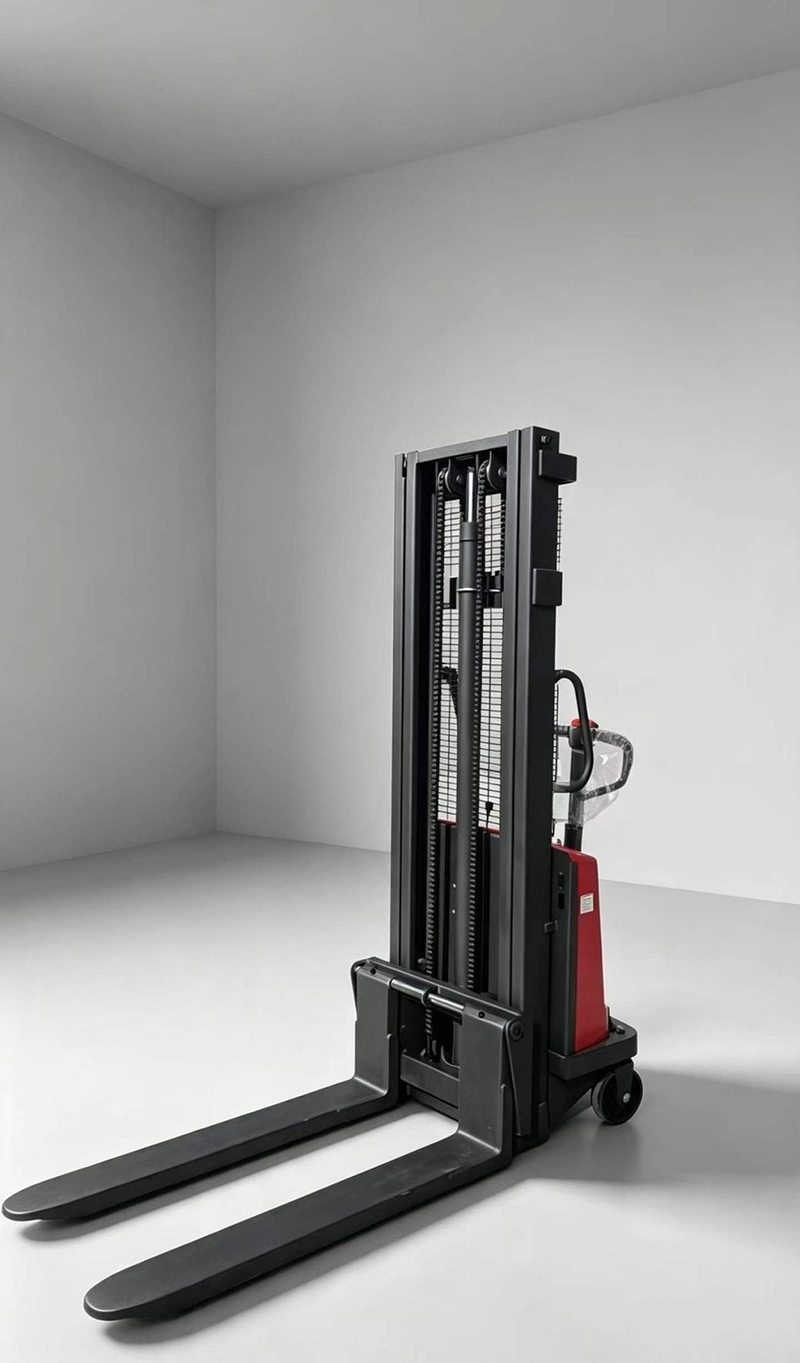
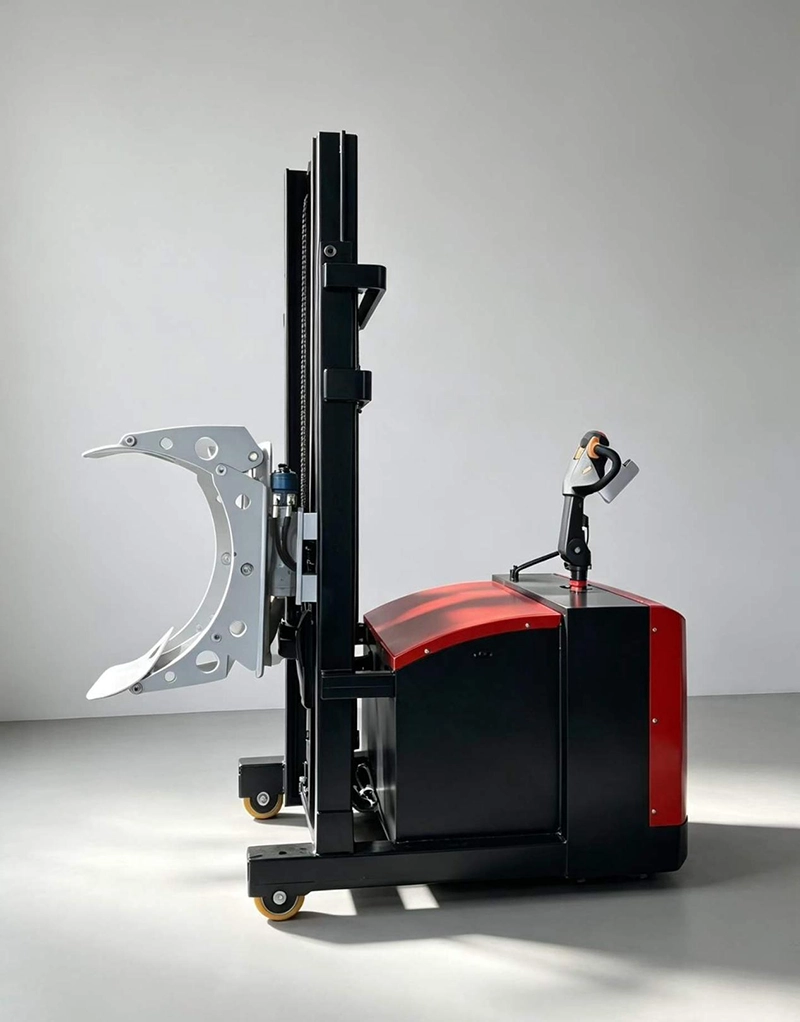
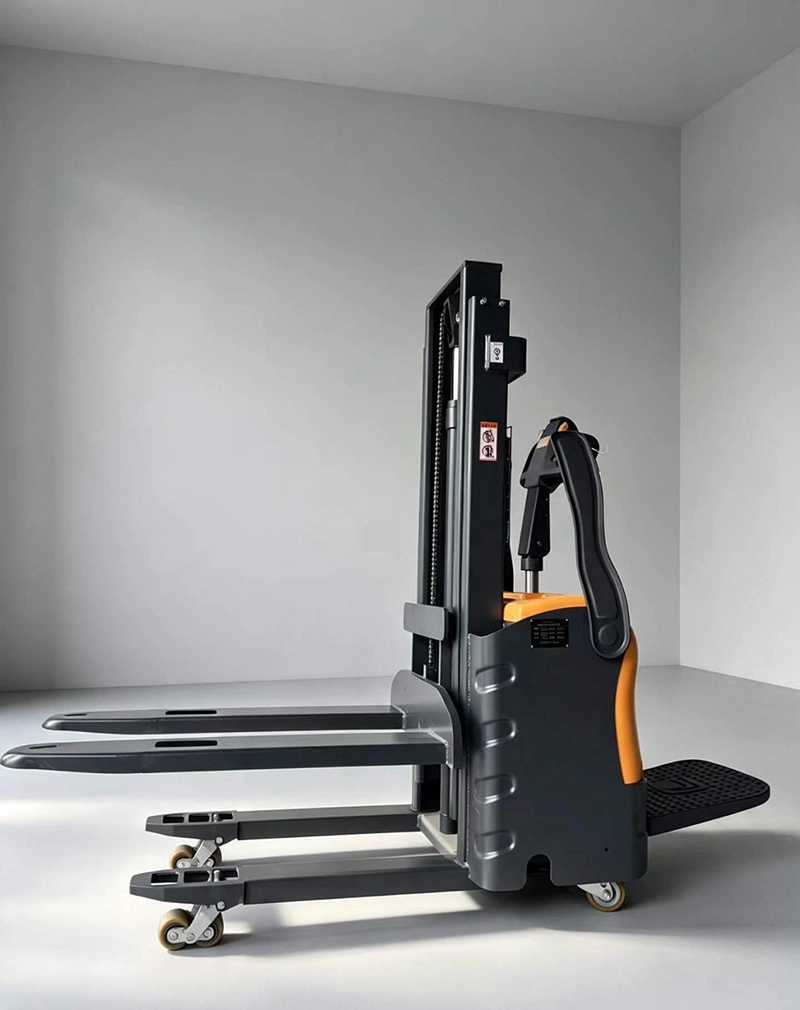
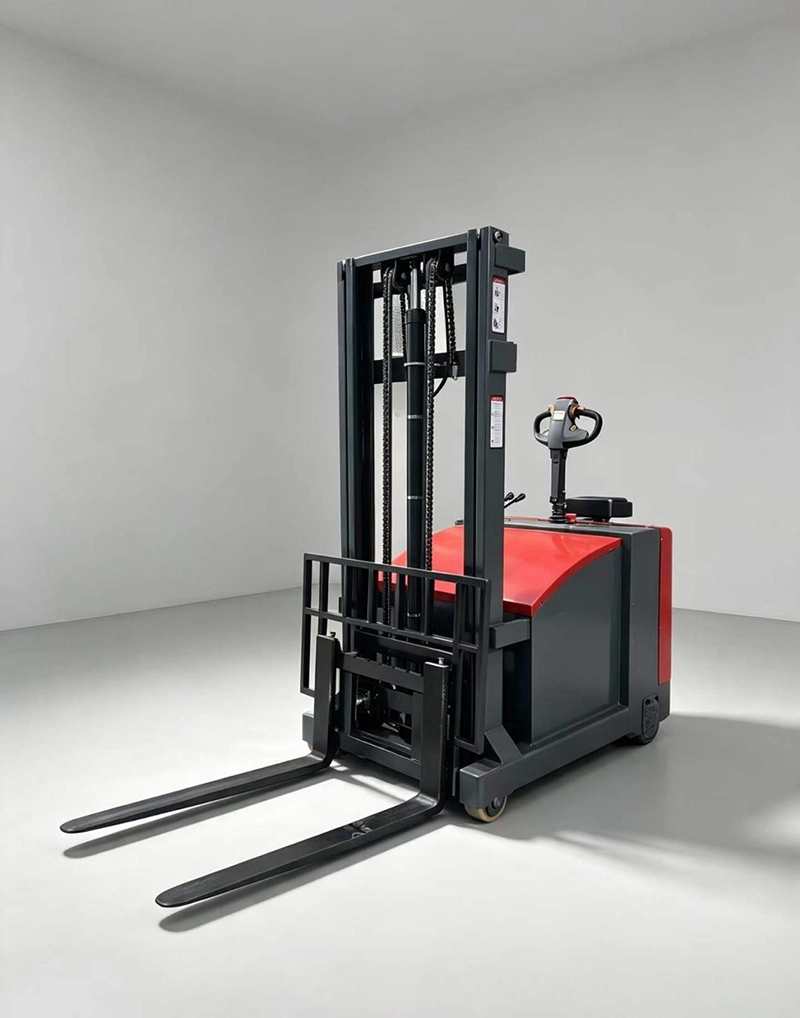
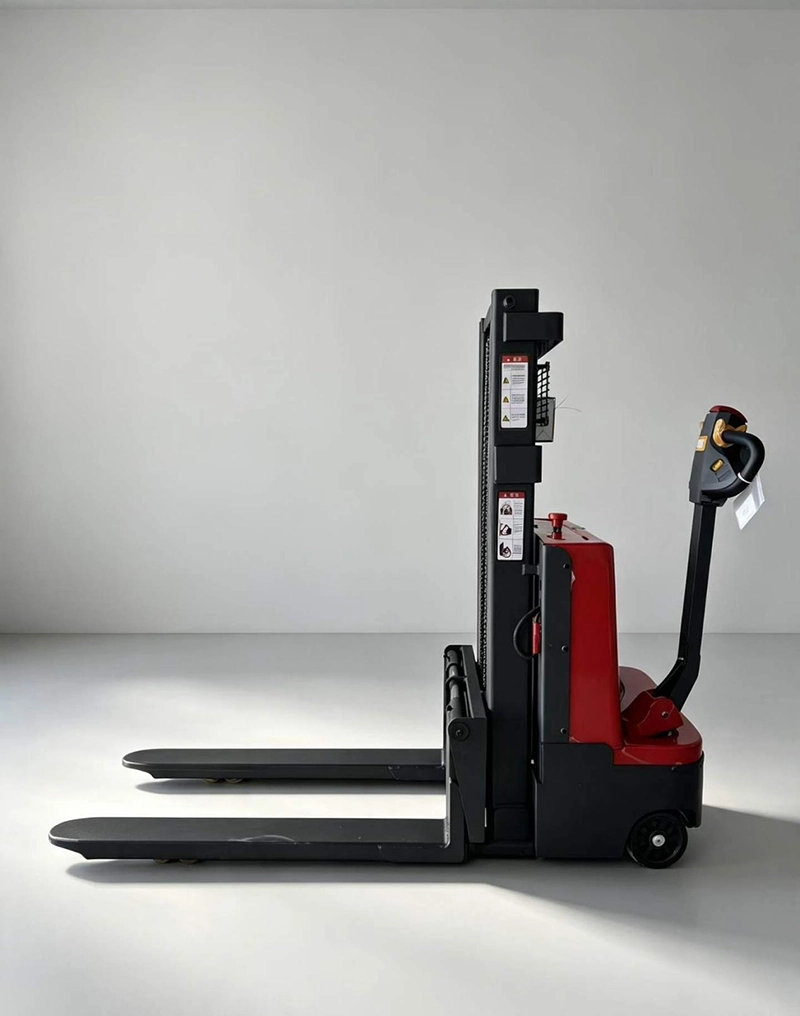
Depending on the design, electric stackers can be configured for different lifting heights, capacities, mast structures and operating environments.
Common applications include:
· Warehouse storage
· Production lines
· Material feeding
· Pallet stacking
· Loading and unloading
· Workshop handling
· Distribution centers
But choosing an electric stacker requires more information than simply saying:
“I need a 1.5-ton stacker.”
Our engineers normally want to know the required lifting height, pallet dimensions, aisle width, working frequency and floor conditions as well.
Different Electric Stacker Designs for Different Jobs
Electric stackers are not all the same.
Depending on the application, customers may consider different configurations.
Walkie Electric Stacker
The operator walks behind or beside the machine while controlling travel and lifting.
This configuration can be suitable where maneuverability and compact dimensions are important.
Straddle Electric Stacker
The leg configuration allows the machine to work with certain pallet types and can provide flexibility for different pallet dimensions.
Counterbalanced Electric Stacker
A counterbalanced structure can be useful when the application requires a different approach to pallet handling and does not allow traditional support legs to work around the load.
Adjustable Fork Electric Stacker
Fork width or configuration can be customized for specific pallet sizes or load requirements.
The best configuration depends on the customer's actual pallet and warehouse conditions.
This is why one picture is never enough to select a stacker.
The Most Important Specification Is Not Always Capacity
Many buyers start with:
“What is the lifting capacity?”
That's important.
But it is only one part of the equation.
Consider a customer who needs to lift 1,000 kg.
That sounds straightforward.
But then we discover the required lifting height is 3.5 meters.
The aisle is narrow.
The pallets are non-standard.
The machine needs to operate continuously.
And the floor has several uneven areas.
Suddenly, the product selection becomes much more complicated.
Our engineers normally evaluate:
· Rated load
· Lifting height
· Load center
· Fork dimensions
· Pallet dimensions
· Overall machine width
· Turning radius
· Mast type
· Battery capacity
· Drive configuration
· Floor condition
· Working frequency
This is what turns a catalog selection into an engineering decision.
Customized Electric Stackers: When Standard Is Not Enough
Sometimes a standard machine simply doesn't fit.
Perhaps the customer has a special pallet.
Perhaps the lifting height is unusual.
Perhaps the aisle is extremely narrow.
Perhaps the customer needs a specific fork size.
Or maybe the equipment needs to fit into an existing production line.
This is where customized electric stackers become valuable.
At MKBK, we support customized production according to customer requirements.
Depending on the project, customization may involve:
· Lifting height
· Rated capacity
· Fork length
· Fork width
· Mast configuration
· Overall dimensions
· Battery configuration
· Wheel configuration
· Controller
· Handle/control arrangement
· Safety configuration
· Customer color
· Logo and branding
图5:MKBK定制电动堆高车及工厂生产现场
But customization should not mean simply changing one dimension.
For example, increasing the lifting height can affect the mast structure.
Increasing the load capacity can affect the frame and hydraulic system.
Changing the machine width can affect stability and turning space.
Changing the battery can affect weight distribution and operating time.
That is why customized equipment needs engineering review before production.
How Engineers Think About Stability
For lifting equipment, stability is fundamental.
Imagine placing a heavy box on the end of a long table.
The farther the load moves away from the support area, the greater the effect on the structure.
The same basic engineering principle applies to lifting equipment.
That's why engineers consider the load center as well as the rated capacity.
A 1,500 kg load positioned close to the mast is not necessarily equivalent to a 1,500 kg load positioned farther forward.
Fork dimensions, load center, lifting height and machine geometry all interact.
This is why professional buyers should avoid selecting a stacker based only on the number printed beside “capacity.”
Capacity without application context can be misleading.
Battery Selection Matters Too
Electric material handling equipment depends heavily on its battery system.
A machine may have an excellent motor and hydraulic system, but if the battery does not match the working cycle, the user may still be disappointed.
Our engineers consider questions such as:
How many hours will the machine operate per day?
How frequently will it lift?
How far will it travel?
How often can it be charged?
Is the machine used continuously or intermittently?
These questions help determine whether the battery configuration is suitable.
For high-frequency applications, battery capacity and charging strategy can have a direct impact on productivity.
What About Narrow Aisles?
This is another common issue in warehouses.
A machine that works perfectly in an open loading area may become difficult to operate in a narrow aisle.
Before choosing equipment, measure the actual working space.
Consider:
· Aisle width
· Door width
· Turning area
· Rack spacing
· Pallet size
· Obstructions
· Floor clearance
A compact machine can be a major advantage in a crowded warehouse.
But making a machine smaller can also affect capacity and stability.
Again, there is a balance.
Good engineering is usually about finding the right balance, not maximizing one specification.
Why Manufacturing Capability Matters
For distributors and importers, product selection is only the beginning.
Once the order becomes large, manufacturing consistency becomes critical.
You may need:
50 units.
200 units.
500 units.
Or even more.
At that point, the supplier needs to maintain consistent dimensions, components, welding, assembly and testing.
MKBK manufactures material handling equipment in batches and supports OEM and customized requirements.
Our production team works with engineering and quality inspection throughout the manufacturing process.
The goal is simple:
The product should remain consistent from the first unit to the last unit.
From Standard Product to Customized Solution
Our product range covers different material handling applications.
For simple pallet movement, we offer manual pallet trucks.
For powered horizontal transportation, customers can consider electric pallet trucks.
For lifting and stacking, we offer different types of electric stackers.
For special applications, we can develop customized electric stackers.
This creates a complete product path:
Move → Lift → Stack → Customize
Instead of looking at each machine separately, customers can build a material handling solution around their actual workflow.
What Should You Tell a Manufacturer Before Asking for a Quote?
If you want an accurate quotation, don't send only:
“Please send me your price for an electric stacker.”
Give the manufacturer a little more information.
For example:
Load capacity: 1,500 kg
Required lifting height: 3,000 mm
Pallet size: 1,200 × 1,000 mm
Application: Indoor warehouse
Aisle width: 2,500 mm
Working hours: 6–8 hours/day
Quantity: 50 units
Customization: Customer logo and color
With this information, an engineer can understand the application much faster.
And the quotation is much more likely to match the equipment you actually need.
MKBK: Manufacturing Different Solutions for Different Work
At MKBK, we believe material handling equipment should serve the workflow, not complicate it.
A manual pallet truck should be simple and dependable.
An electric pallet truck should reduce unnecessary physical effort.
An electric stacker should make lifting and stacking more efficient.
A customized electric stacker should solve the problems that standard models cannot.
We manufacture these products in volume and support customized requirements for distributors, importers, warehouses, factories and industrial customers.
Whether you need one standard model or a large customized order, our engineers can start with your working conditions and work backward toward the right configuration.
You tell us:
What are you moving?
How heavy is it?
How high do you need to lift it?
How often will you use the machine?
How much space do you have?
What needs to be customized?
Then we can talk about the machine.
Because the best material handling equipment isn't necessarily the biggest, fastest or most expensive.
It is the machine that makes your daily work easier.
MKBK — Moving materials is simple. Choosing the right equipment takes engineering.
 Factory Address: Dongl ü industrial Area,Qingyuan District, Baoding City, Hebei Province, China
 Contact number:
 Emall:
  Website:





 Home
Home Whatsapp
 Email
Email