
 English
 русский
 Español
 Indonesia
 Tiếng Việt
 Current Location:
-
Permanent Magnet Lifter: A Complete Guide to Safe and Efficient Steel Material Handling
-
Car Towing Belt: Heavy‑Duty Webbing Sling for Roadside & Off‑Road Vehicle Rescue
-
Retractable Lifeline — Self‑Retracting SRL Fall‑Protection Device for Working‑at‑Height Safety
-
Ultra Quiet Casters — Premium Low‑Noise Industrial Caster Wheels for Noise‑Sensitive Working Environments

Online consulting
If you have any questions, please contact our online customer service staff immediately
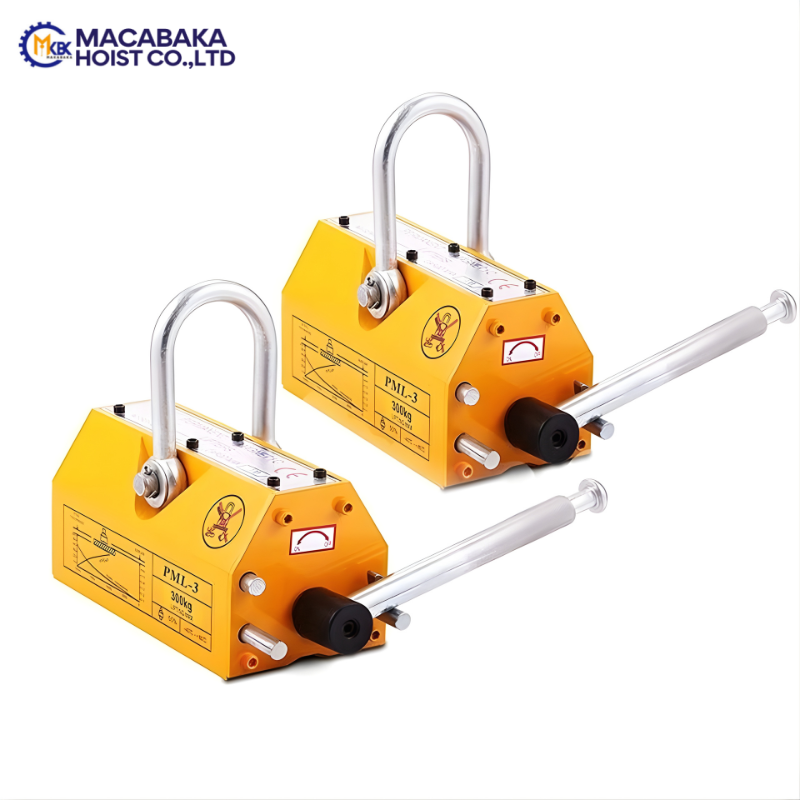
Permanent Magnet Lifter: A Complete Guide to Safe and Efficient Steel Material Handling
 Click:3
  Time:2026-09-24 16:32:26
What Is a Permanent Magnet Lifter
A permanent magnet lifter is a manual magnetic lifting device built with high‑grade NdFeB rare‑earth magnets. It switches magnetic‑circuit status by rotating the manual lever, achieving adsorption and release for steel plates, round steel, molds and other ferromagnetic workpieces. Unlike electromagnetic lifters, it requires zero external power, and will not drop loads even under power‑failure conditions, greatly lowering industrial safety risks.
MKBK Hoist permanent magnet lifter adopts optimized magnetic‑circuit design, mechanical safety‑lock handle and V‑slot base. It can handle both flat steel plates and cylindrical round‑steel workpieces, widely adopted for machine shops, steel‑fabrication workshops, warehouses, ship‑building and metal‑processing plants.

Core Technical Specifications of MKBK Hoist Permanent Magnet Lifter
| Model | Rated Lifting Capacity(kg) | Safety Factor | Min. Steel‑Plate Thickness | Net Weight(kg) | Typical Usage |
|---|---|---|---|---|---|
| MK‑PML100 | 100 | 3.5:1 | ≥4mm | 12 | Mold small‑part handling |
| MK‑PML600 | 600 | 3.5:1 | ≥6mm | 23 | Medium steel‑plate workshop |
| MK‑PML2000 | 2000 | 3.5:1 | ≥10mm | 56 | Steel‑structure fabrication |
| MK‑PML5000 | 5000 | 3.5:1 | ≥16mm | 112 | Ship‑building & heavy‑duty yard |
Key Advantages of MKBK Hoist Permanent Magnet Lifter
- Power‑free Safety: No power supply required. Load will not fall during power outages, higher safety compared with electro‑magnetic lifters.
- Mechanical Safety‑lock: Lock‑in handle prevents accidental demagnetization in lifting transit.
- Dual‑purpose V‑slot Base: Handle flat steel plates and cylindrical round‑steel shafts or pipes.
- Low‑cost Operation: Zero energy consumption, simple maintenance, long magnet service‑life.
- Compact & Portable: Easy to connect with overhead cranes, chain hoists for flexible material‑handling tasks.
Critical Factors When Selecting Permanent Magnet Lifter
Rated capacity only works under ideal conditions. Actual lifting force will drop influenced by multiple field‑factors, you should consider these points before purchasing:
- Workpiece Material: Only fit for ferromagnetic carbon‑steel; poor or zero performance for aluminum, copper, 304/316 austenitic stainless‑steel.
- Steel‑plate Thickness: Workpiece thickness shall meet minimal requirement of each model. Thin plate reduces effective suction force heavily.
- Surface Condition: Rust, paint, oil and dust will create air‑gap and weaken magnetic holding‑power. Keep contact surface clean and flat before lifting.
- Load Shape: When lifting round‑steel, effective capacity shall be reduced to 50% of flat‑plate rated value.
Common Application Scenarios
MKBK Hoist permanent magnet lifter serves multiple industrial verticals: steel‑processing factories, mold workshops, machinery manufacturing, warehouse stock turnover, ship‑building yards, metal‑recycling yards. It replaces traditional wire‑rope slings and clamps, speeds‑up loading‑unloading and lowers surface scratch risk for steel workpieces.
Daily Maintenance Tips
Clean the lifting‑face regularly to eliminate rust and debris; inspect shackle, handle locking‑mechanism before each shift. Do not beat or strike magnet surface. Store in dry indoor environment when idle, avoid long‑term high‑temperature exposure.
Frequently Asked Questions
Q1: Can permanent magnet lifter lift stainless‑steel?
A: 304/316 austenitic stainless‑steel is non‑magnetic and cannot be lifted. 400‑series martensitic stainless‑steel can be lifted but with reduced effective capacity.
Q2: What does safety‑factor 3.5:1 mean?
A: The ultimate pull‑off force reaches 3.5 times rated working‑load. Operators should never exceed the marked rated‑capacity for real lifting work.
Q3: Can I lift thin steel plates below 4 mm?
A: Not recommended. Insufficient steel thickness cannot conduct full magnetic flux and will cause hidden safety‑hazards of load dropping.
Q4: Does permanent magnet lifter need electricity to work?
A: No. It works by internal permanent‑magnet groups and manual lever switch, zero power‑supply required during whole lifting workflow.
Q5: How to lift extra‑long large‑size steel‑plates?
A: Use multiple permanent magnet lifters matched with spreader‑beam to share load, prevent workpiece bending and slipping risk.
Conclusion
Permanent magnet lifter delivers safe, energy‑saving and high‑efficiency solution for ferrous‑metal handling. When you select MKBK Hoist permanent magnet lifter, match model according to real‑world workpiece thickness, material property and load‑weight. Strictly follow operation specifications to maximize equipment service‑life and guarantee workshop‑site safety.
- Previous Article:
- Next Article: Car Towing Belt: Heavy‑Duty Webbing Sling for Roadside & Off‑Road Vehicle Rescue

 Factory Address: Dongl ü industrial Area,Qingyuan District, Baoding City, Hebei Province, China
 Contact number:
 Emall:
  Website:





 Home
Home Whatsapp
 Email
Email