
 English
 русский
 Español
 Indonesia
 Tiếng Việt
 Current Location: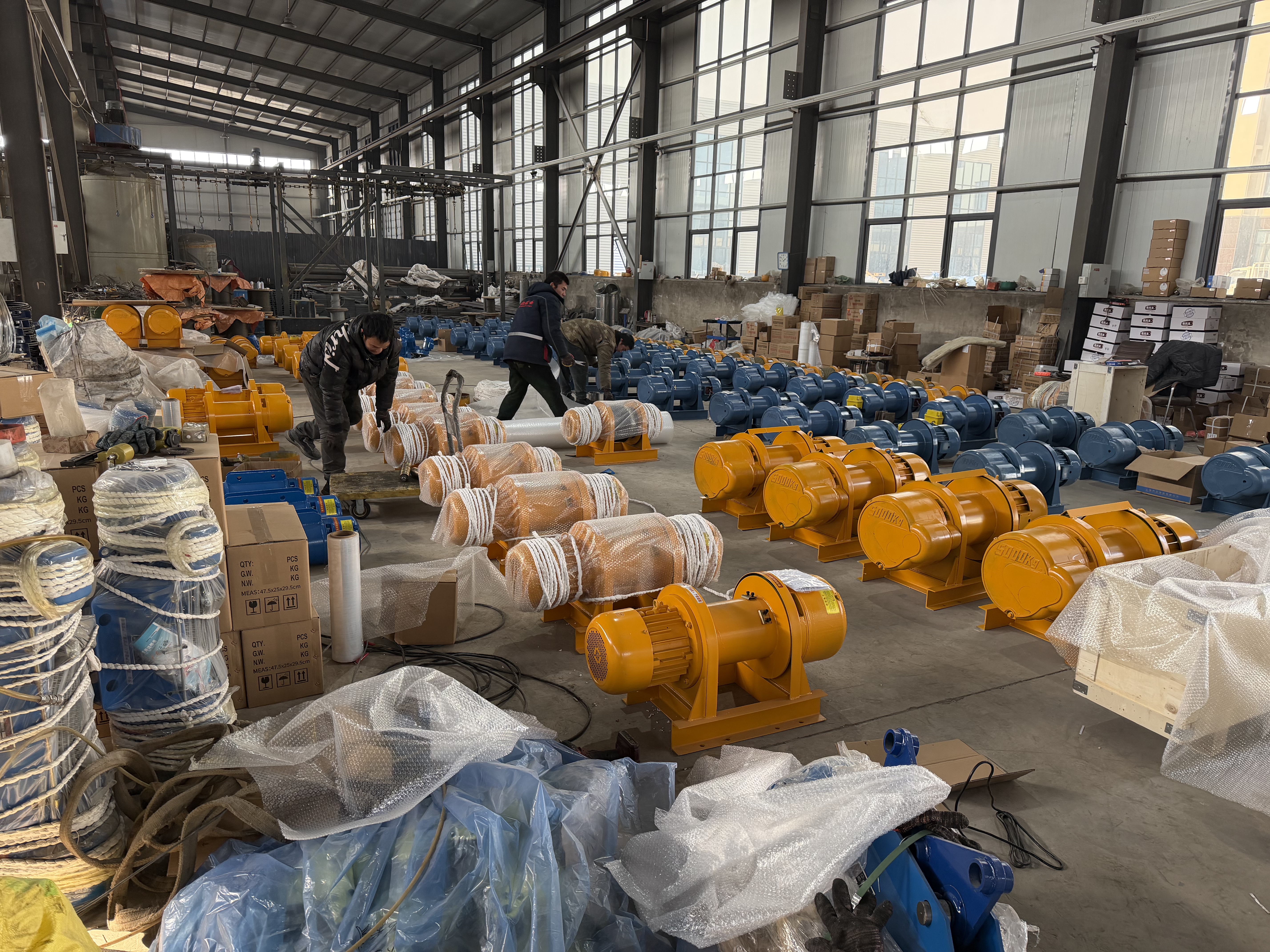

Online consulting
If you have any questions, please contact our online customer service staff immediately
What Is a Wire Rope Hoist Used For?
 Click:4
  Time:2026-04-23 09:38:26
A Practical Guide from MKBKHOIST
If you’ve ever seen heavy steel, machinery, or large components being lifted smoothly in a factory — chances are, a wire rope hoist was doing the job.
It’s one of those machines that people don’t always notice, but once it stops working, everything slows down.
At MKBKHOIST, we usually explain it simply:
when the load gets heavier and the job gets more demanding, a wire rope hoist becomes the better choice.
1. What Is a Wire Rope Hoist?
A wire rope hoist is a lifting device that uses a steel wire rope and motor system to raise and lower heavy loads.
Instead of a chain, it uses multiple steel wires twisted together — which makes it stronger and more suitable for heavy-duty lifting.
In simple terms:
it’s built for heavier loads, longer lifting heights, and more frequent use
2. The Core Use: Lifting Heavy Loads
The main purpose of a wire rope hoist is straightforward:
- lifting heavy materials
- lowering loads safely
- positioning equipment precisely
It’s commonly used when the load is too heavy or too large for manual handling.
In many industries, it replaces manual lifting completely — not just for efficiency, but for safety.
3. Where Is It Commonly Used?
Wire rope hoists are widely used across different industries because of their high load capacity.
Typical applications include:
• Manufacturing Plants
Used to move heavy machinery, raw materials, and finished products within workshops.
• Construction Sites
Lifting steel structures, concrete components, and building materials.
• Warehouses & Logistics
Handling large or bulky goods that require stable lifting and positioning.
• Ports & Heavy Industry
Loading and unloading cargo, especially where loads are large and frequent.
• Crane Systems
Often installed on overhead cranes or gantry cranes to perform vertical lifting.
4. Why Use a Wire Rope Hoist Instead of a Chain Hoist?
This is a common question.
The difference comes down to performance:
- Higher lifting capacity → suitable for heavy-duty work
- Faster lifting speed → improves efficiency
- Smoother operation → better control for large loads
- Longer lifting height → ideal for taller facilities
Wire rope hoists are generally preferred in industrial environments because they can handle larger and heavier loads more efficiently than standard hoists.
5. What Makes It So Effective?
Behind the scenes, a few key parts work together.
- Motor → provides lifting power
- Drum → winds and unwinds the rope
- Wire rope → carries the load
- Hook → connects to the load
- Brake system → ensures safety
When the motor turns the drum, the rope moves — and the load goes up or down smoothly.
It’s a simple system, but designed for heavy-duty performance.
6. One Practical Insight from Real Use
Many users think a wire rope hoist is just a “bigger hoist”.
But in real operations, the biggest advantage is:
stability under heavy loads
Compared to other lifting methods, it provides:
- better control
- less swinging
- more precise positioning
This becomes critical when handling expensive or sensitive equipment.
Final Thoughts
A wire rope hoist is not just about lifting —
it’s about lifting safely, efficiently, and consistently in demanding environments.
If your operation involves:
- heavy loads
- frequent lifting
- higher working heights
then a wire rope hoist is usually the right solution.
At MKBKHOIST, we always recommend choosing equipment based on real working conditions — because in lifting, reliability matters more than anything else.
- Previous Article:
- Next Article: Custom Electric Stacker: Working Principle, Key Components and Engineering Design Insights

 Factory Address: Dongl ü industrial Area,Qingyuan District, Baoding City, Hebei Province, China
 Contact number:
 Emall:
  Website:





 Home
Home Whatsapp
 Email
Email