
 English
 русский
 Español
 Indonesia
 Tiếng Việt
 Current Location: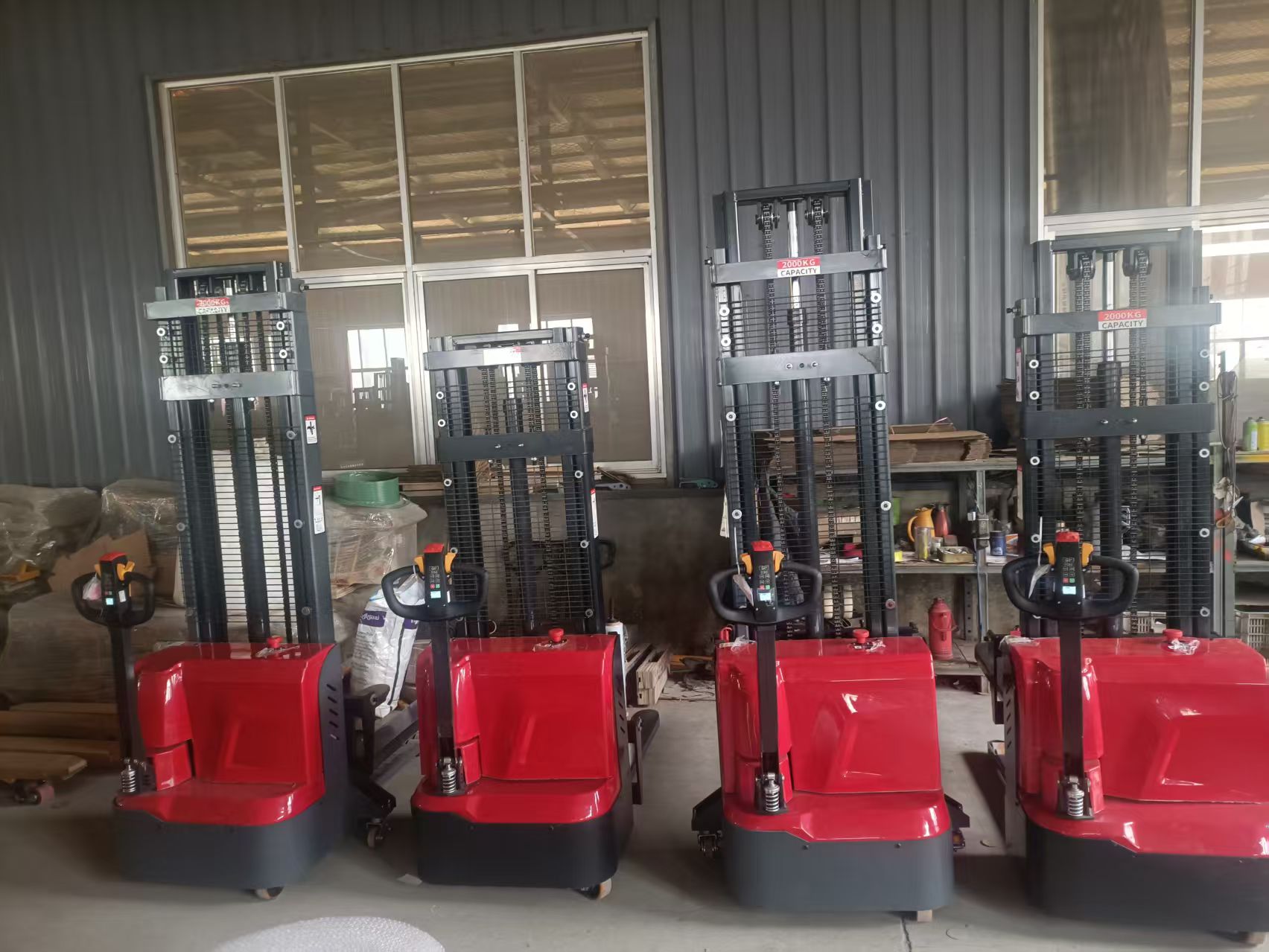

Online consulting
If you have any questions, please contact our online customer service staff immediately
Custom Electric Stacker: Working Principle, Key Components and Engineering Design Insights
 Click:3
  Time:2026-04-20 14:28:27
Custom Electric Stacker: Working Principle, Key Components and Engineering Design Insights
By mkbkhoist Engineering Team
In today’s warehousing and logistics environments, standard equipment often struggles to meet real operational demands.
Differences in aisle width, pallet types, floor conditions, and working intensity mean that electric stackers are no longer one-size-fits-all products. In many cases, they must be engineered to match specific applications.
At mkbkhoist, we have been involved in a wide range of customization projects across different industries. This article explains the working principle of electric stackers and highlights the key engineering considerations behind a truly customized solution.
Working Principle of an Electric Stacker
An electric stacker operates based on a combination of electrical drive and hydraulic lifting.
The core principle can be summarized as a process of energy conversion: electrical energy is transformed into hydraulic pressure, which is then converted into mechanical lifting force.
The system is based on Pascal’s Law, where pressure applied to a confined fluid is transmitted equally in all directions. This allows a relatively small input force to generate sufficient lifting capacity for heavy loads.
In practical operation, the process works as follows:
The battery supplies power to the motor.
The motor drives the hydraulic pump.
Hydraulic oil is forced into the cylinder.
Pressure builds inside the cylinder and pushes the piston upward.
The fork rises together with the load.
When lowering, the control valve releases pressure in a controlled manner.
From an operator’s perspective, the process feels simple. From an engineering perspective, it requires precise coordination between multiple systems.
Key Components of a Custom Electric Stacker
The performance and reliability of an electric stacker depend on several core systems working together.
Hydraulic System
The hydraulic system is the heart of the lifting function. It typically includes the hydraulic pump, oil cylinder, oil reservoir, and control valves.
This system determines lifting capacity, stability, and long-term durability. The quality of seals, valves, and internal machining directly affects performance and service life.
Electric Drive System
The drive system includes the motor, controller, and drive wheel assembly.
It defines how the machine moves, including travel speed, acceleration, and responsiveness. A well-matched controller ensures smooth operation and efficient energy use.
Different applications may require different configurations, especially in terms of power output and control sensitivity.
Mast and Structural System
The mast structure is responsible for vertical movement and load stability. It usually consists of duplex or triplex mast configurations, along with the main frame and fork carriage.
This system determines lifting height and structural rigidity. Poor structural design can lead to instability, especially at higher lifting positions.
Battery and Power Management
The battery system provides the primary energy source. Common options include lead-acid and lithium batteries.
Battery selection affects operating time, charging cycles, and maintenance requirements. For high-frequency operations, lithium batteries are often preferred, while lead-acid remains a cost-effective solution for lighter use.
Control and Safety System
This includes the handle controls, emergency stop switch, limit switches, and pressure relief valves.
These components ensure safe operation by preventing overload, controlling movement limits, and allowing immediate shutdown in emergency situations.
Power Transmission Process
Understanding how energy flows through the machine is essential for proper engineering design.
The sequence can be described as follows:
The battery provides electrical energy to the controller.
The controller regulates power delivery to the motor.
The motor drives the hydraulic pump.
The pump creates oil flow and pressure.
The hydraulic cylinder converts pressure into linear motion.
The fork lifts the load.
Each stage must be properly matched. Any imbalance in this chain can lead to inefficiency or premature failure.
What Customization Really Means
In the market, customization is often limited to surface-level changes. In practice, real customization goes much deeper.
At mkbkhoist, customization typically involves the following aspects:
Dimensional Adjustment
This includes modifying fork length, overall width, and turning radius to suit narrow aisles or specific pallet types.
Performance Tuning
Lifting speed, travel speed, and acceleration can be adjusted based on operational requirements. Heavy-duty applications require different configurations compared to light warehouse use.
Power System Configuration
Battery type, capacity, and charging solutions are selected according to working hours and usage intensity. Special environments, such as cold storage, also require tailored solutions.
Structural Reinforcement
For higher load capacities or demanding conditions, structural components such as the mast and chassis can be reinforced to improve durability and safety.
Application-Based Engineering
Instead of starting from a standard product, the design process begins with the actual working environment. Factors such as indoor or outdoor use, floor conditions, daily operating hours, and operator habits all influence the final configuration.
Practical Engineering Considerations
Several real-world factors must be taken into account when designing a custom electric stacker.
Load capacity is closely related to lifting height, and capacity typically decreases as height increases.
Duty cycle plays a critical role. Equipment used for extended shifts requires more robust motors and higher-capacity batteries.
Floor conditions affect wheel selection and overall performance. Rough surfaces demand more durable materials.
Operator behavior also matters. Frequent starting and stopping require precise controller tuning to ensure smooth and efficient operation.
Why Engineering Matters More Than Price
Two machines may appear similar externally, but internal differences can be significant.
Variations in hydraulic components, steel quality, and control systems can lead to major differences in performance and lifespan.
A well-engineered stacker can operate reliably for years, while a poorly designed one may encounter issues within a short period.
The difference lies not in appearance, but in engineering decisions.
Conclusion
A custom electric stacker is not simply a variation of a standard product. It is the result of combining hydraulic principles, electrical systems, and application-specific design.
Understanding how these elements interact is essential for achieving reliable and efficient performance.
At mkbkhoist, we approach each project from an engineering perspective, focusing on real working conditions and long-term usability.
- Previous Article:
- Next Article: Electric & Manual Dual-Mode Stacker

 Factory Address: Dongl ü industrial Area,Qingyuan District, Baoding City, Hebei Province, China
 Contact number:
 Emall:
  Website:



 Home
Home Whatsapp
 Email
Email
