EnglishEnglish

Industry Blog

pathdivCurrent Location:NewsIndustry Blog

Top 6 Lifting Chains With Hooks: What You Need to Know

Click:46 Time:2026-05-18 10:37:30

Top 6 Lifting Chains With Hooks: What You Need to Know

By mkbkhoist Engineering Team

In lifting operations, most failures do not begin with the crane.

They begin with small details:

  • The wrong hook type
  • Incorrect chain grade
  • Poor connection angles
  • Low-quality alloy steel

A lifting chain with hook may look simple, but behind every safe lift is a carefully engineered system.

At mkbkhoist, we often hear the same questions from buyers:

“Why do some lifting chains last for years, while others deform after a few months?”
“Why do hooks sometimes open or fail under load?”
“Which lifting chain is actually suitable for my work?”

The answer usually comes down to engineering design, chain grade, hook selection, and real working conditions.


Why Lifting Chains With Hooks Matter

Lifting chains with hooks are widely used in:

  • Construction sites
  • Warehouses
  • Steel factories
  • Shipyards
  • Mining operations
  • Heavy equipment handling

Compared with synthetic slings, alloy lifting chains perform better in:

  • High-temperature environments
  • Sharp-edge lifting
  • Heavy abrasion conditions

But not every chain is suitable for overhead lifting.

Chain grade, hook structure, and Working Load Limit (WLL) determine safety.


Top 6 Most Common Lifting Chains With Hooks

1. Single-Leg Chain Sling With Hook

The most basic and widely used lifting configuration.

Structure:

  • One master link
  • One alloy chain leg
  • One sling hook

Best for:

  • Straight vertical lifting
  • Balanced loads
  • General warehouse applications

Simple structure often means easier inspection and lower maintenance.


2. Double-Leg Chain Sling With Hooks

A two-leg chain sling provides better load stability and weight distribution.

Best for:

  • Steel plates
  • Machinery
  • Long or uneven loads

However:

The wider the lifting angle, the higher the tension placed on each chain leg.

Many operators underestimate how much lifting angle affects safety.


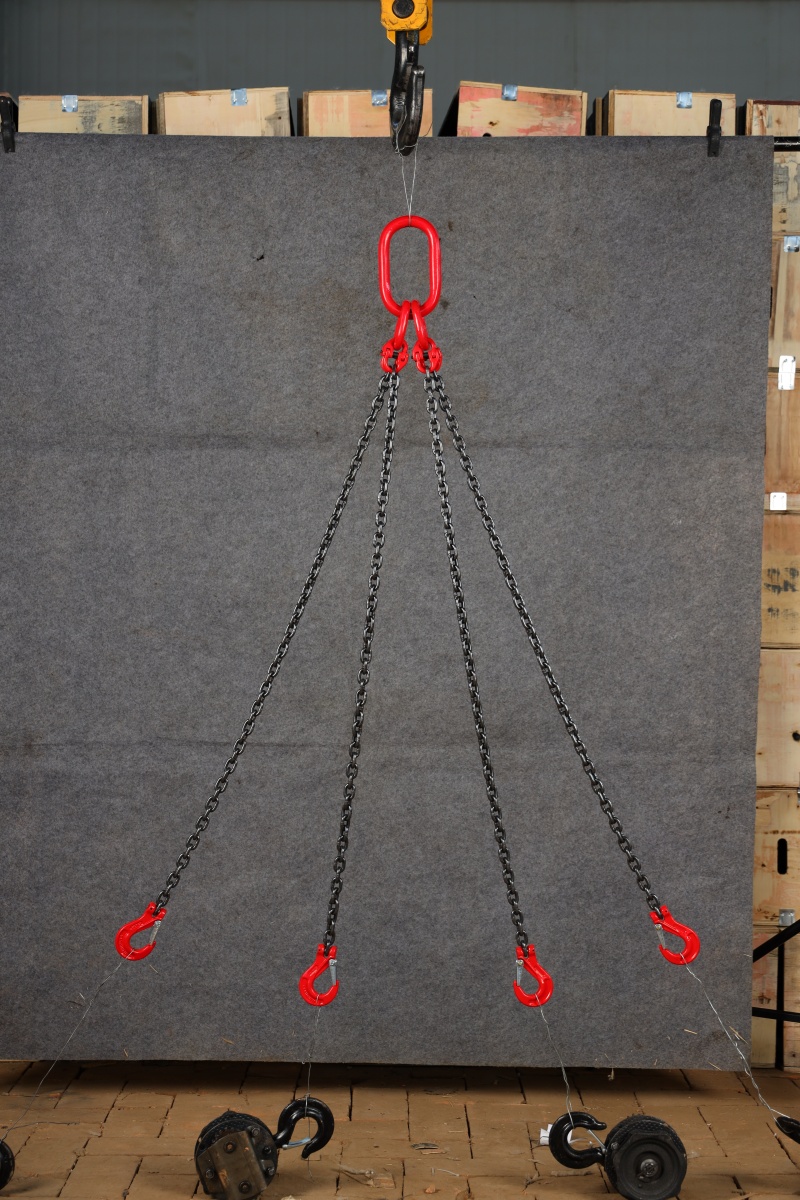
3. Four-Leg Chain Sling

Used for heavy-duty industrial lifting where maximum stability is required.

Best for:

  • Large structural components
  • Heavy machinery
  • Multi-point lifting operations

Advantages:

  • Better balance
  • Improved load control
  • Reduced swinging during lifting

But engineering precision becomes more important as sling complexity increases.


4. Self-Locking Hook Chains

Self-locking hooks automatically secure once load is applied.

Advantages:

  • Higher lifting safety
  • Reduced accidental disengagement
  • Better for dynamic lifting environments

Commonly used in:

  • Ports
  • Construction projects
  • High-frequency lifting operations

For overhead lifting, hook locking systems matter more than many buyers realize.


5. Grab Hook Chain Assemblies

Grab hooks are designed to shorten chain length by holding a chain link directly.

Advantages:

  • Adjustable lifting length
  • Flexible rigging setup
  • Faster field adjustment

But improper use can be dangerous.

Using grab hooks incorrectly may change force direction and reduce safety performance.


6. Electric Chain Hoists With Hook Systems

Electric chain hoists combine powered lifting with hook-based load connection.

Best for:

  • Repeated lifting operations
  • Factory production lines
  • Warehouse handling

Important engineering considerations:

  • Motor durability
  • Chain wear resistance
  • Hook strength
  • Brake system reliability

A good electric chain hoist is not just about lifting speed—it is about long-term operational stability.


Understanding Chain Grades: G80 vs G100

One of the biggest mistakes buyers make is ignoring chain grade.

Common lifting grades include:

  • G80
  • G100

G100 chain can provide approximately 25% higher Working Load Limit compared with G80 of the same diameter.

However:

  • Higher grade also requires proper matching hooks and fittings
  • Mixing incompatible components creates safety risks

In lifting systems, every component must match as one engineered assembly.


What Buyers Should Pay Attention To

Hook Type Matters

Common hook styles include:

  • Clevis hooks
  • Eye hooks
  • Self-locking hooks
  • Grab hooks

Different hooks are designed for different lifting conditions.

Using the wrong hook may cause:

  • Side loading
  • Hook deformation
  • Load instability

Working Load Limit (WLL)

Never choose lifting chains based only on appearance or price.

The WLL must match:

  • Load weight
  • Lifting angle
  • Dynamic lifting conditions

Overloading is one of the most common causes of chain failure.


Inspection and Maintenance

Chains should always be checked for:

  • Elongation
  • Cracks
  • Hook deformation
  • Corrosion
  • Worn latch systems

Even experienced riggers emphasize that improper hook alignment and twisted chain legs create serious safety risks.


What We Focus on at mkbkhoist

At mkbkhoist, we believe lifting equipment should perform reliably in real working conditions—not only in catalog photos.

That is why we focus on:

  • High-strength alloy steel
  • Strict load testing
  • Reliable hook systems
  • Stable welding and heat treatment
  • Real application analysis

Whether customers need:

  • Manual lifting chains
  • Heavy-duty sling assemblies
  • Electric chain hoists
  • Customized lifting solutions

…our engineering goal remains the same:

Reliable lifting with long-term safety.


Conclusion

A lifting chain with hook is more than a simple accessory.

It is a critical safety component that directly affects:

  • Load stability
  • Operator safety
  • Equipment reliability
  • Long-term operating cost

Choosing the right lifting chain means understanding:

  • Chain grade
  • Hook type
  • Working environment
  • Real lifting conditions

Because in lifting operations, safety is never accidental.


Keywords

#LiftingChains, #ChainSling, #LiftingHooks, #RiggingEquipment, #ElectricChainHoist, #MaterialHandling, #IndustrialSafety, #LiftingEquipment, #ChainHoist, #HeavyLifting, #EngineeringDesign, #OEMManufacturer, #FactoryDirect, #WarehouseEquipment, #mkbkhoist

ONLINE INQUIRY

Close
Close

Security Code

CAPTCHA